
چکیده مقاله
The rapid proliferation of smart cities has introduced unprecedented opportunities for improving urban life through interconnected devices and data driven services However, the extensive deployment of Internet of Things IoT devices and pervasive data collection has simultaneously raised critical concerns regarding security and privacy Unauthorized access, data breaches, and malicious attacks can compromise sensitive citizen information, infrastructure reliability, and overall trust in smart city ecosystems In this context, Artificial Intelligence AI emerges as a transformative tool, enabling proactive detection of anomalies, prediction of potential threats, and implementation of adaptive defense mechanisms This review systematically examines the state of the art AI based approaches for enhancing security and preserving privacy within smart cities Key objectives include categorizing existing methodologies, evaluating their effectiveness in diverse urban IoT environments, and identifying inherent limitations and challenges Furthermore, this paper highlights the prevailing gaps in research and outlines potential directions for future investigations, including the integration of privacy preserving machine learning techniques, adversarial resilience, and secure edge computing strategies By providing a comprehensive overview of AI driven security solutions, this study aims to guide researchers, practitioners, and policymakers toward designing robust, reliable, and privacy conscious smart city infrastructures The findings emphasize that while significant advancements have been achieved, ongoing research is essential to address emerging threats and to ensure that the benefits of smart cities are realized without compromising citizen privacy or system integrity
کلیدواژهها
نویسندگان

Zahra Taji
Computer Department of Vahdat Torbat Jam Institute of Higher Education
Behzad Molavi
Computer Department of Vahdat Torbat Jam Institute of Higher Education
Mostafa Farhadi Moghadam
Computer Department of Vahdat Torbat Jam Institute of Higher Education
شیوه ارجاع
Taji, Zahra and Molavi, Behzad and Farhadi Moghadam, Mostafa,1404,A Comprehensive Survey on AI-Based Security and Privacy in Smart Cities,The Third National Conference on Digital Transformation & Intelligent Systems,Larestan
ارائهشده در
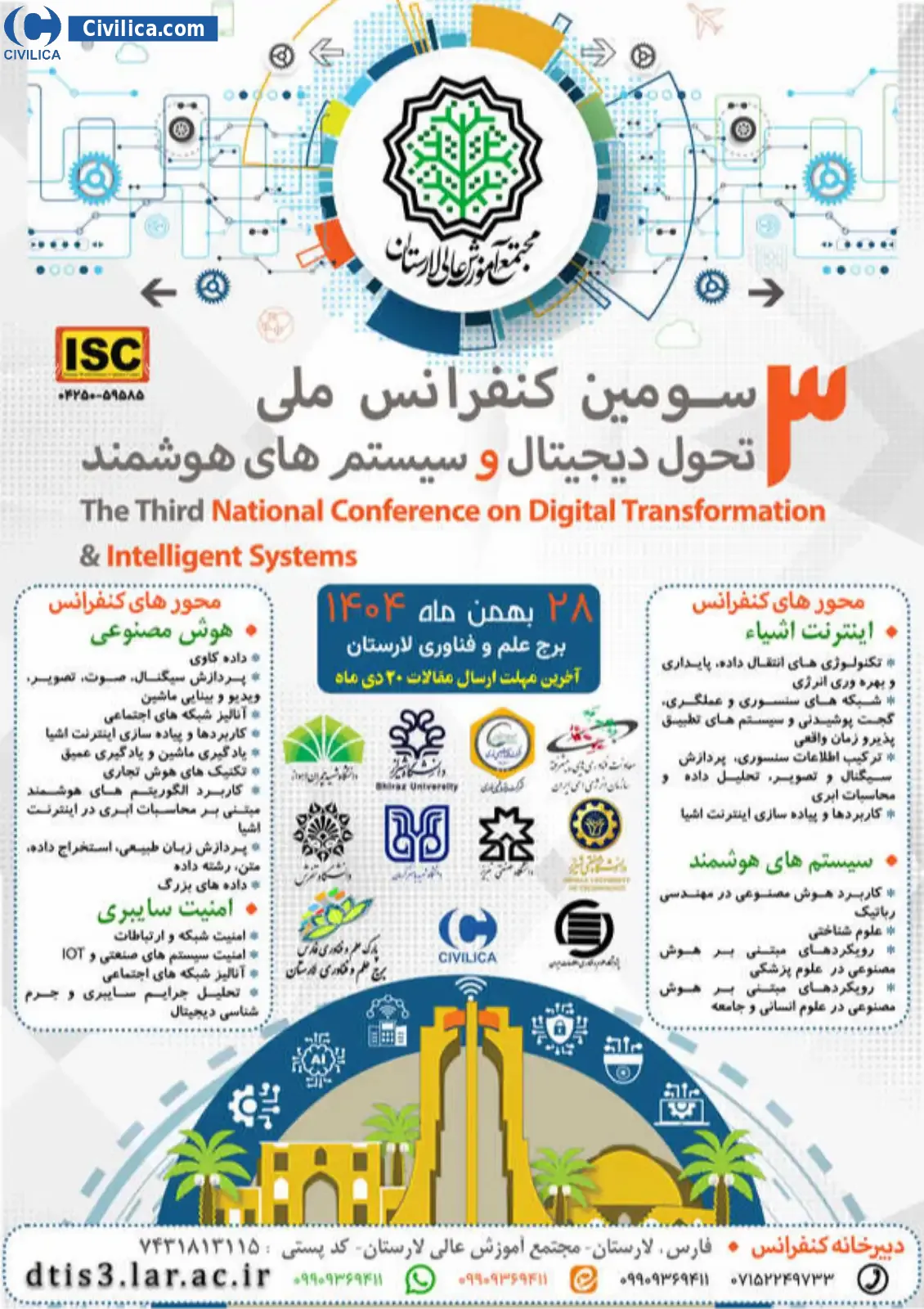 مجموعه مقالات سومین کنفرانس ملی تحول دیجیتال و سیستم های هوشمند28 بهمن 1404 · لارستان