
چکیده مقاله
Smart traffic control systems leveraging predictive analytics significantly outperform traditional traffic management approaches in reducing urban congestion in metropolitan areas By integrating machine learning algorithms, Internet of Things IoT sensors, and real time data streams with existing urban infrastructure, these systems achieve remarkable outcomes without requiring extensive physical modifications Studies demonstrate that smart traffic control systems reduce congestion by 10%, with some reporting up to a 20% decrease in average wait times from approximately 5 minutes to 4 6 minutes Additional benefits include a 10% increase in traffic flow efficiency, 90% rerouting efficiency, and a 5% reduction in travel time, alongside fivefold faster congestion detection compared to conventional methods These improvements stem from advanced techniques such as artificial neural networks, federated learning, and hybrid regression models, which enable adaptive and privacy preserving traffic management Despite these advancements, challenges remain, including limited reporting on cost effectiveness and long term scalability across diverse urban settings This report synthesizes findings from studies, highlighting the transformative potential of smart traffic systems while identifying gaps in standardized metrics and long term impact assessments
کلیدواژهها
نویسندگان

Mohammad Bahrami
Msc student of business administration (MBA), Department of Management, science and Technology, Amirkabir University of Technology, Tehran, Iran
Mohammad Bahrami
Msc student of business administration MBA , Department of Management, science and Technology, Amirkabir University of Technology, Tehran, Iran
شیوه ارجاع
Bahrami, Mohammad,1404,Smart traffic control systems using predictive analytics to reduce traffic congestion in urban metropolitan areas compared to traditional traffic management approaches,the 13th International Conference on Strategic Ideas in Architecture, Civil Engineering and Urban Planning in Iran,Mashhad
ارائهشده در
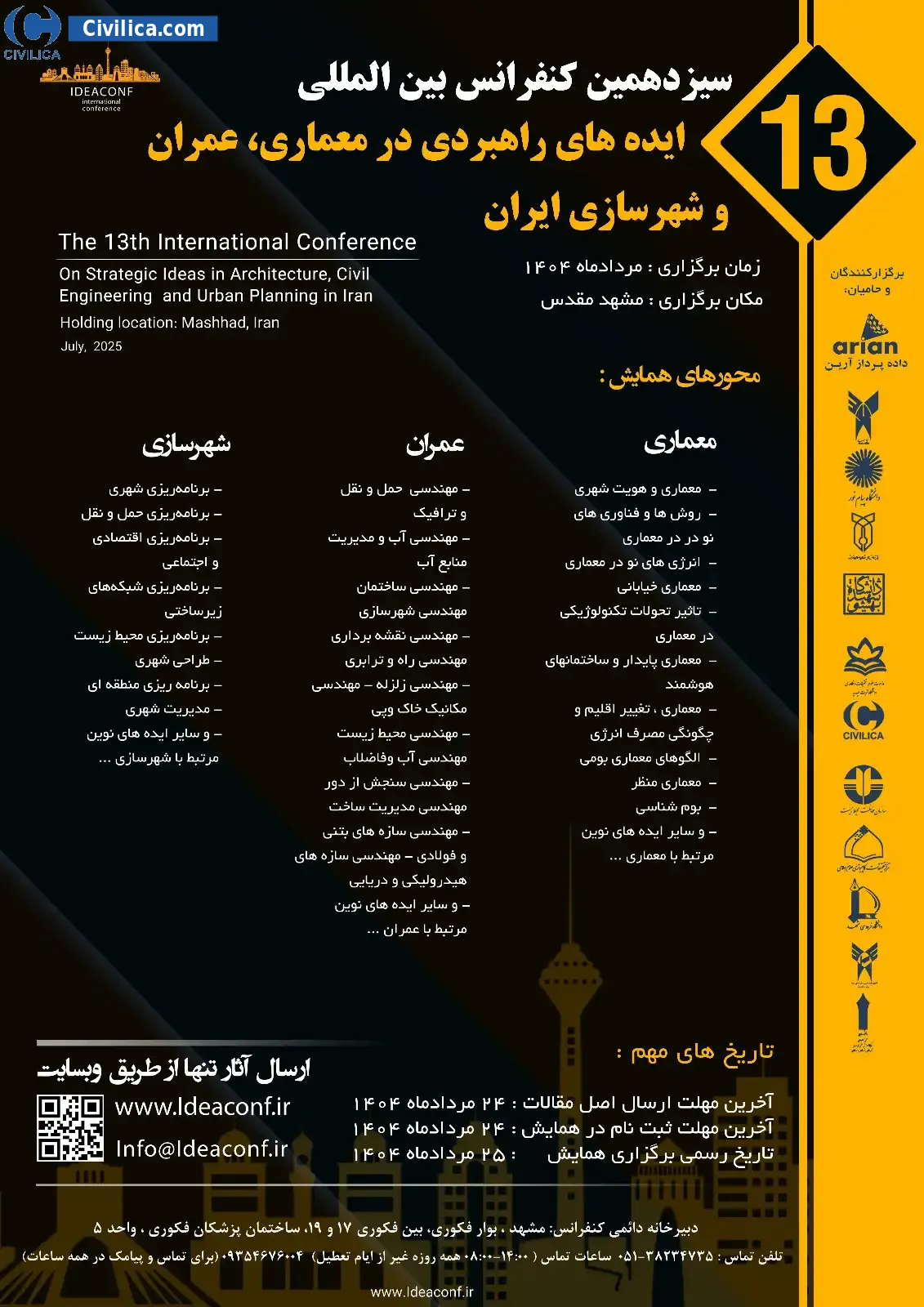 مجموعه مقالات سیزدهمین کنفرانس بین المللی ایده های راهبردی در معماری، عمران و شهرسازی ایران25 مرداد 1404 · مشهد