
چکیده مقاله
Money laundering is a criminal act with devastating effects on the domestic economy of states and their international image Money laundering is a secondary crime committed as a result of a primary criminal act, intended to conceal or purge and neutralize a financial transaction, and also means knowingly concealing the illicit source of property resulting from the commission of such crimes in such a way that the property seems legal and legitimate The criminalizing of such an act was raised following the spread of organized crime in the world, and the goal was to reduce the motivation of criminals to commit crimes by cutting off the hands of criminals from their criminal proceeds, and thus to fight money laundering In addition, features including the high rate of money laundering in the world, the organized, transnational, and without being specifically criminalized nature, economic, social, and political adverse effects as well as close connection with other crimes necessitate criminalization of money laundering in the world and also in Iran Thus, an act on combating money laundering has been passed in Iran, which has not yet passed the final stages of legislation There are numerous international and regional instruments on money laundering, including Vienna Convention 1988, Council of Europe Convention 1990, European Directive 1991, FATF Forty Recommendations 1990 and its amendments in 19960 and 2000, Palermo Convention in 2000, and the Anti Corruption Convention 2003 The solutions provided by these documents are necessarily judicial or legislative The purpose of these strategies is to narrow the field for money launderers as much as possible and increase the cost of money laundering operations for them so that committing a crime is useless for them and as a result prevents them from committing a crime
کلیدواژهها
نویسندگان

Mohammad Rasoul Ahangaran
Full Professor, Department of Law, Tehran University, Iran
Meysam Safareh
Research Scholar, Educated in Master of Law, Tehran, Iran
شیوه ارجاع
Ahangaran, Mohammad Rasoul and Safareh, Meysam,1400,Money Laundering in Iranian Domestic law and International Law,Seventh International Conference on Law and Justice
ارائهشده در
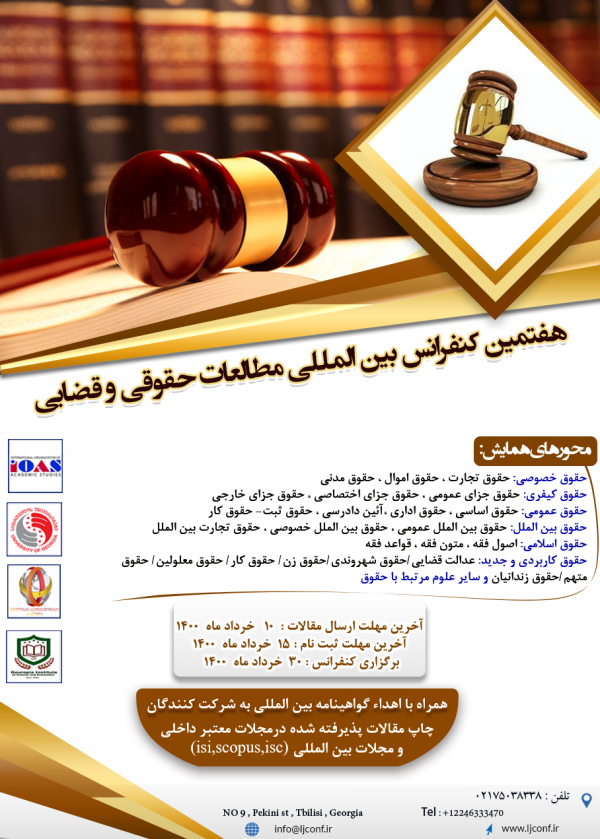 مجموعه مقالات هفتمین کنفرانس بین المللی مطالعات حقوقی و قضایی30 خرداد 1400