
چکیده مقاله
The Pauli Exclusion Principle, also known as the Pauli Principle or the Principle of Exclusion, is a fundamental concept in quantum mechanics formulated by Austrian Swiss physicist Wolfgang Pauli in 1925 The Pauli Exclusion Principle states that no two electrons—or more generally, no two identical fermions—can occupy the same quantum state simultaneously for example, be in the same place at the same time This principle plays a crucial role in understanding various phenomena, from elementary particles to the structure of stars According to this principle, no two electrons in an atom can have the same set of quantum numbers It is therefore essential to consider the concept of quantum numbers, which are assigned to each electron or quantum state and vary based on type, spin, vibration, and rotation In physical interpretation, the principle states that two particles cannot occupy the same location at the same time This article is a review of the Pauli Exclusion Principle The research was conducted using a library based approach
کلیدواژهها
نویسندگان

Peyman Bani Bayat
Associate Professor, Law Department, Noavaran Campus, University of Tehran, Tehran, Iran
Borna Bani Bayat
Ninth grade high school student
شیوه ارجاع
Bani Bayat, Peyman and Bani Bayat, Borna,1404,The Pauli Exclusion Principle: A Pillar of Quantum Mechanics,The 6th international conference on artificial intelligence and its future prospects in electrical, computer, mechanical and telecommunication engineering sciences.,Mashhad
ارائهشده در
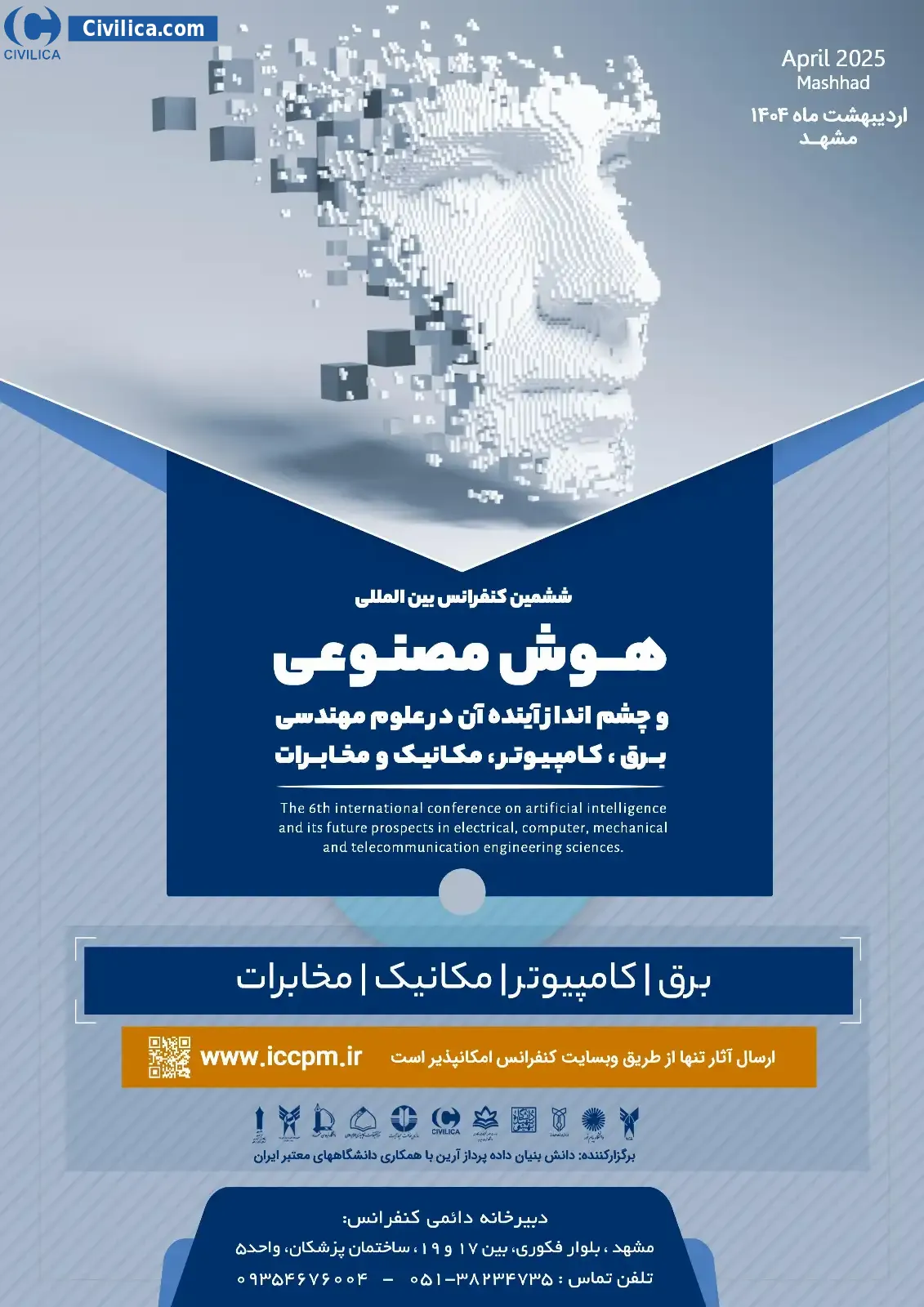 مجموعه مقالات ششمین کنفرانس بین المللی هوش مصنوعی و چشم انداز آینده آن در علوم مهندسی برق ، کامپیوتر ، مکانیک و مخابرات20 اردیبهشت 1404 · مشهد