
چکیده مقاله
Illegal water connections are a significant contributor to non revenue water NRW , causing economic losses, technical issues, and inefficient resource use in urban water supply systems This study examines the mechanisms for detecting, monitoring, and removing illegal drinking water connections in Shahroud city and evaluates their impact on reducing network water losses A descriptive analytical approach was applied, using realistic simulated data, expert interviews, and historical water utility records Key indicators, including NRW percentage and the Infrastructure Leakage Index ILI , were calculated to quantify effectiveness Results show that systematic identification and removal of illegal connections reduced total network water loss by approximately 37%, with the largest reductions in densely populated districts GIS based monitoring, periodic inspections, and community engagement were crucial for efficient detection and compliance The findings also demonstrate that combining technical, administrative, and social strategies improves operational performance, mitigates pressure related issues, and optimizes resource allocation These results are applicable not only to Shahroud but also to other medium sized cities facing similar challenges Policy recommendations include adopting smart metering systems, implementing long term monitoring programs, increasing public awareness, and strengthening enforcement measures Overall, the study provides evidence that a coordinated approach to managing illegal water connections is both technically feasible and economically beneficial, offering a practical framework for improving network efficiency and sustainability
کلیدواژهها
نویسندگان

Zahra Raeyati
Shahroud’s municipal water & wastewater co
شیوه ارجاع
Raeyati, Zahra,1404,Mechanism of Collecting Illegal Drinking Water Connections and Its Impact on Reducing Network Water Loss (Case Study: Shahroud City),The Third National Conference on Water Quality Management and the Fifth National Conference on Water Consumption Management with a Waste Reduction and Recycling Approach,Tehran
ارائهشده در
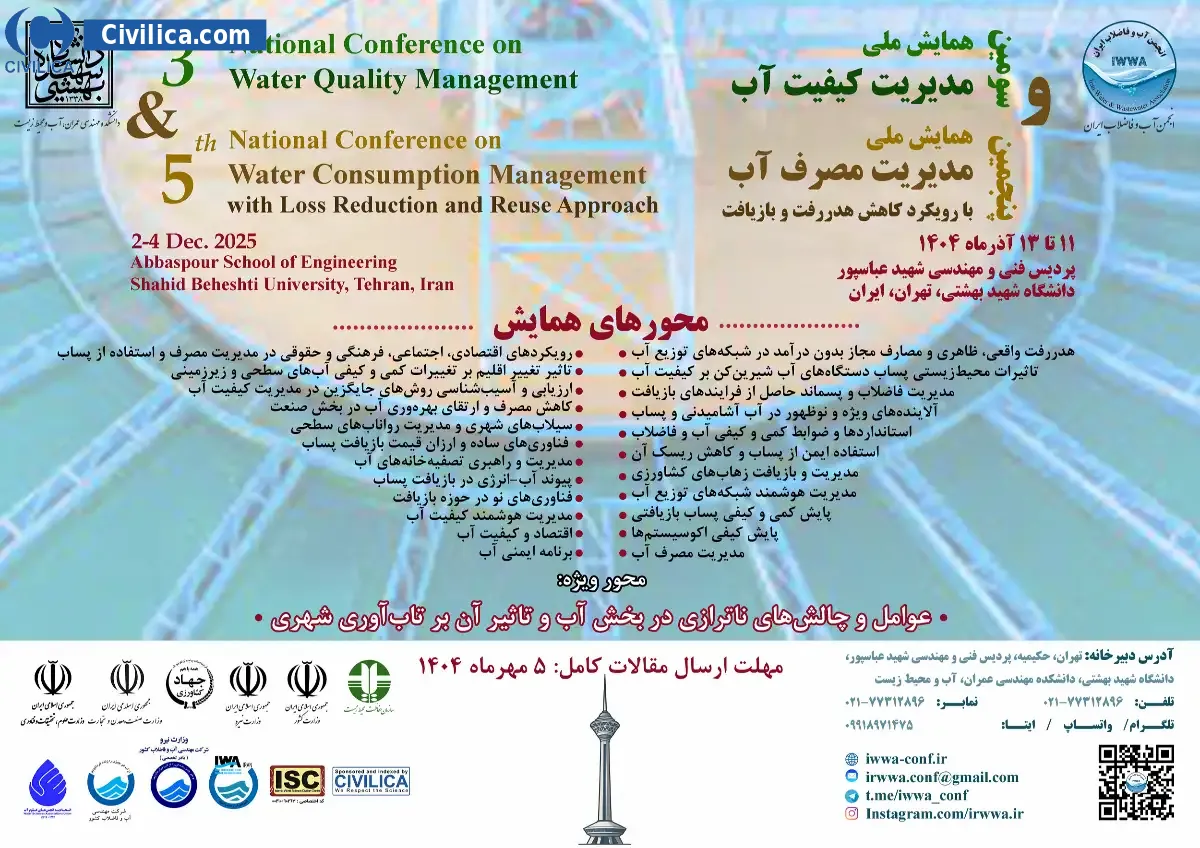 مجموعه مقالات سومین همایش ملی مدیریت کیفیت آب و پنجمین همایش ملی مدیریت مصرف آب با رویکرد کاهش هدررفت و بازیافت11 آذر 1404 · تهران