
چکیده مقاله
Improper waste management can have detrimental environmental impacts, including anincrease in the carbon footprint This study aimed to provide practical solutions toreduce the carbon footprint of waste in Qazvin city To achieve this goal, a combinedDelphi method and Likert scale questionnaires were employed Initially, several keyindicators in the field of waste management were identified Subsequently, theimportance and priority of each indicator were evaluated based on the collectiveopinions of experts The results indicated that the three indicators of waste generationrate, greenhouse gas emissions, and waste management costs are among the mostsignificant challenges facing Qazvin city In contrast, indicators such as publicawareness and participation, utilization of renewable energy sources, and privatesector involvement are not in a favorable condition Factors like the efficiency of wastecollection systems, recycling infrastructure, and the adoption of new technologies wereassessed as moderate Based on these findings, 10 key solutions were proposed,including waste volume control, improvement of collection and disposal systems,development of recycling infrastructure, adoption of economic policies, raising publicawareness, encouraging private sector participation, utilization of clean energy sources,and strengthening regulations Successful implementation of these solutions could beconsidered essential steps towards reducing the carbon footprint of waste and achievingsustainable development in Qazvin city
کلیدواژهها
نویسندگان

Saeed Ghiasvand Mohammadkhani
Postgraduate graduate in Urban Planning, Department of urban planning, Faculty ofArchitecture and Art, University of Guilan, Rasht, Iran
Sajjad Shabani Kolachahi
PhD Student in Urban Planning, Department of urban planning, Faculty of Architecture andArt, University of Guilan, Rasht, Iran
شیوه ارجاع
Ghiasvand Mohammadkhani, Saeed and Shabani Kolachahi, Sajjad,1403,Investigation of Challenges and Presentation ofSolutions to Reduce the Carbon Footprint of Wastein Qazvin City,Second International Conference on applied researches in civil engineering, architecture and urban planning
ارائهشده در
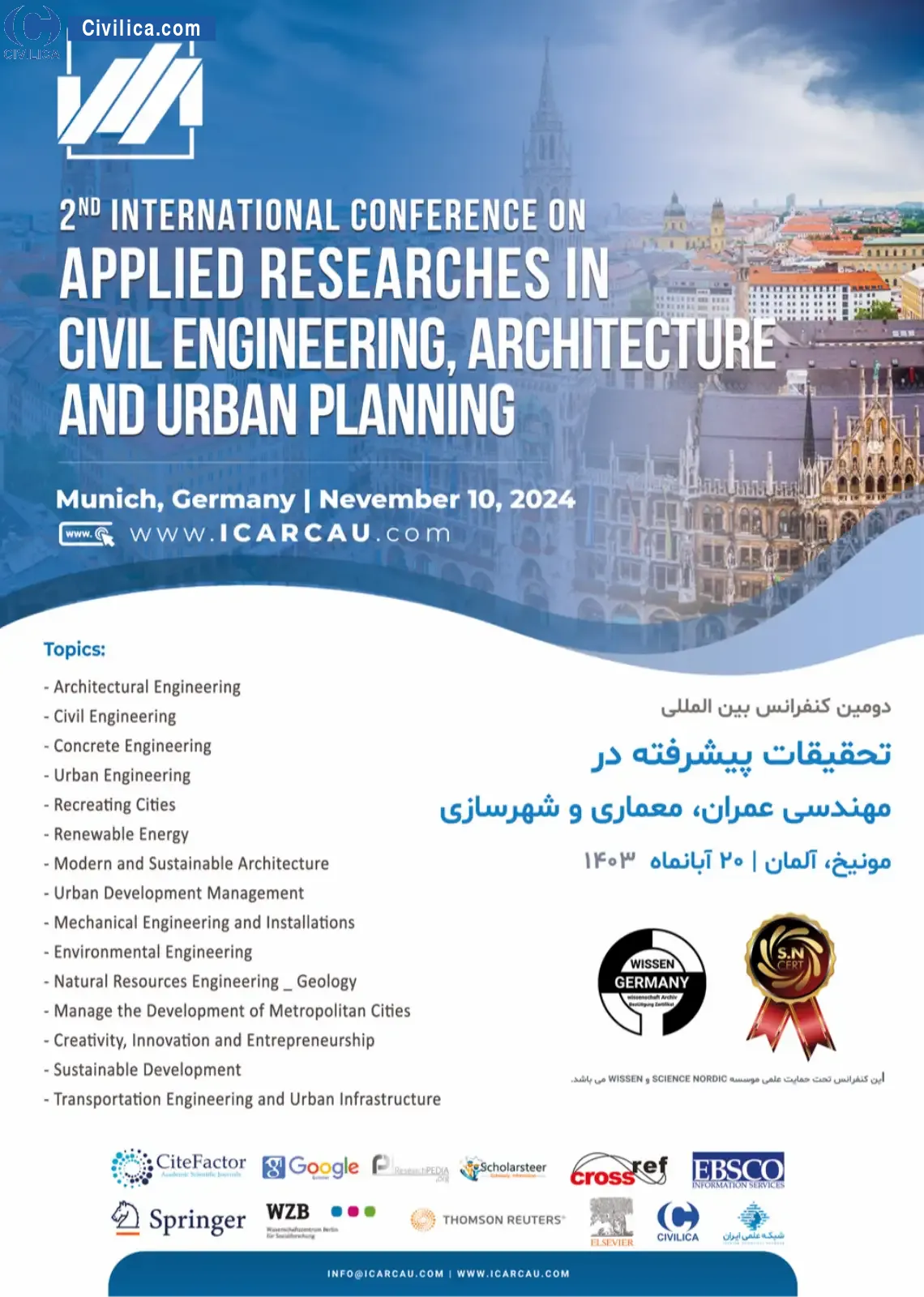 مجموعه مقالات دومین کنفرانس بین المللی تحقیقات پیشرفته در مهندسی عمران، معماری و شهرسازی20 آبان 1403