
چکیده مقاله
The current study was an attempt to examine the effect of short story as an educational tool have any significant effect on the Iranian EFL learners’ writing accuracy and complexity To this end, 60 Iranian EFL learners from Kanon Zaban language institute, in Zahedan, Iran, were selected and taken from the intermediate level classes They were divided into equal groups as the experimental and control groups The selected groups took a pretest of essay writing task to ascertain their homogeneity in terms of the initial writing ability Next, the experimental group was taught based on the instruction via reading short stories In the treatment phase, totally eight sessions of treatments were offered within eight weeks of instruction for experimental group In this phase, during each session the students in experimental group was taught the materials using short stories in a way that after presenting the reading material they were asked to underline the unfamiliar vocabulary items and lexical combinations then tried to guess the meanings based on the context of the story Then, learners were given time to exchange views about the items they learnt At the end of each session, the researcher asked the participants to write a summary of the reviewed section of predetermined short story using the newly learned vocabulary items and combinations The participants in the control group were taught and practice classroom writing using traditional methods without any treatment The obtained data were analyzed via conducting descriptive statistics and MANOVA The results revealed that short story had a positively significant effect on the Iranian EFL learners’ writing accuracy and complexity Finally, the theoretical and pedagogical implications of the study are presented
کلیدواژهها
نویسندگان

Omid Hashem Zehi
Master's Degree in English Language Teaching, Islamic Azad University, Zahedan Branch, Zahedan Iran
Farhanaz Yousefi
Faculty Member of the Faculty of Islamic Azad University, Zahedan Branch Zahedan Iran
شیوه ارجاع
Zehi, Omid Hashem and Yousefi, Farhanaz,1403,The Effect of Short Stories on the Iranian EFL Learner's Writing Accuracy and Complexity,19th International Conference on Language , Literature , Culture and History Studies
ارائهشده در
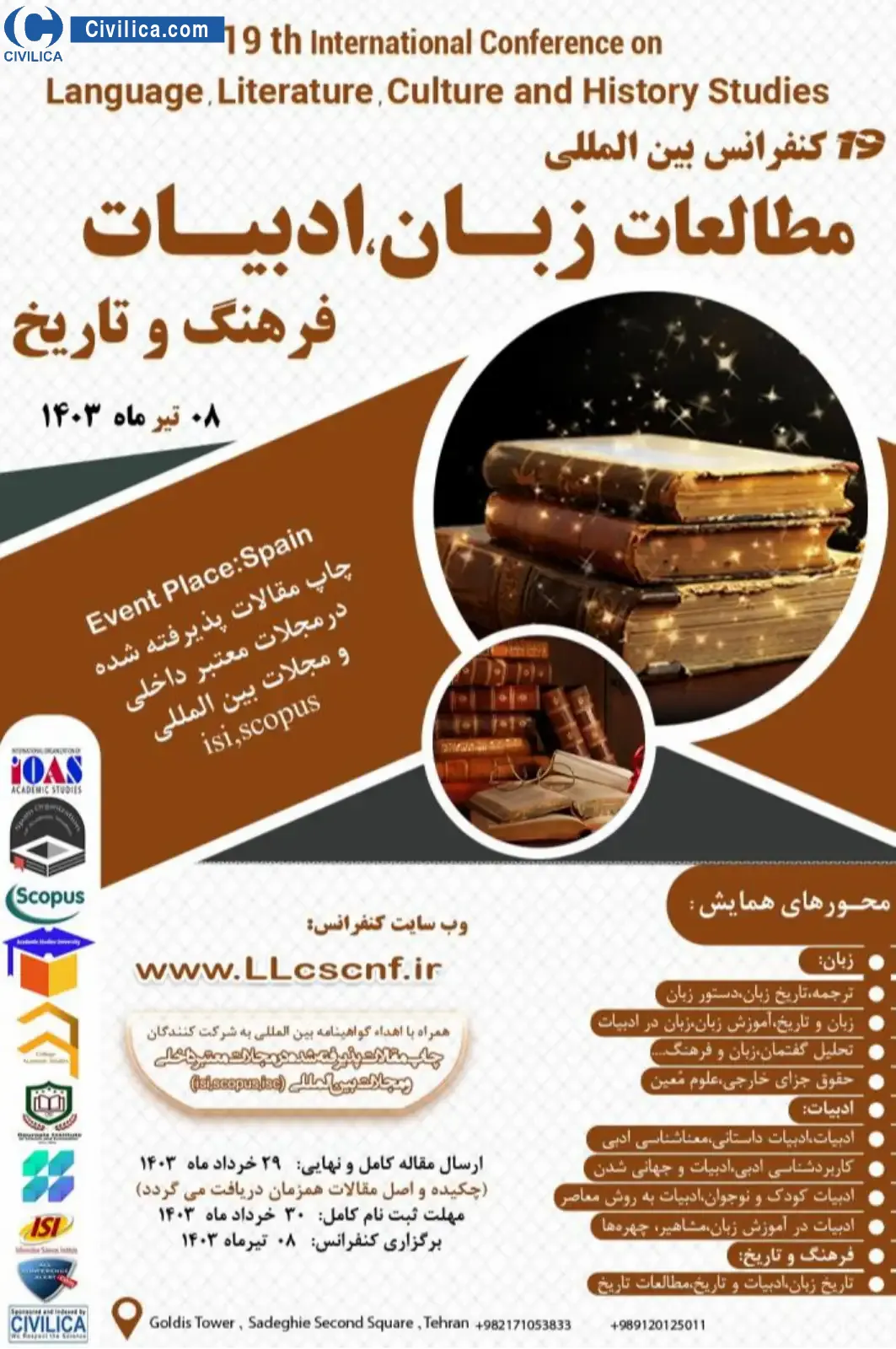 مجموعه مقالات نوزدهمین کنفرانس بین المللی مطالعات زبان، ادبیات، فرهنگ و تاریخ8 تیر 1403