
چکیده مقاله
The role of architecture in promoting social sustainability within sport facilities has garneredincreasing attention in recent years, reflecting a broader recognition of the profound impact of builtenvironments on social well being and community development This paper explores the significanceof social sustainability in sport facilities, with a specific focus on the Iranian context, where theintegration of architectural design with social objectives holds particular importance Drawing upon theprinciples of social sustainability, including leveraging sport as a vehicle for social change, aneducational tool, a promoter of health and welfare, and a diplomatic instrument, this study examines themultifaceted ways in which sport facilities can contribute to the social fabric of Iranian communities Through a comprehensive analysis, the paper highlights the challenges and opportunities inherent in thedesign of sport facilities in Iran and proposes a series of architectural solutions aimed at achieving socialsustainability goals These solutions encompass designing for inclusivity and accessibility, adopting ahuman scale approach to design, preserving local identity and traditions, providing multifunctionalspaces, incorporating landscaping elements, and ensuring proper siting within communities Byembracing these principles and implementing innovative design strategies, sport facilities in Iran havethe potential to become transformative spaces that foster inclusivity, empowerment, and communityresilience, leaving a lasting legacy of social well being and cohesion
کلیدواژهها
نویسندگان

Fatemeh Najafi Sanagoo
Faculty of Architecture, Tehran University of Art, Tehran, Iran
Amirhosein Zandi
Faculty of Architecture, Tehran University of Art, Tehran, Iran
شیوه ارجاع
Najafi Sanagoo, Fatemeh and Zandi, Amirhosein,1403,The Impact of Architectural Design on the SocialSustainability of Sport Facilities in Iran,Second International Conference on applied researches in civil engineering, architecture and urban planning
ارائهشده در
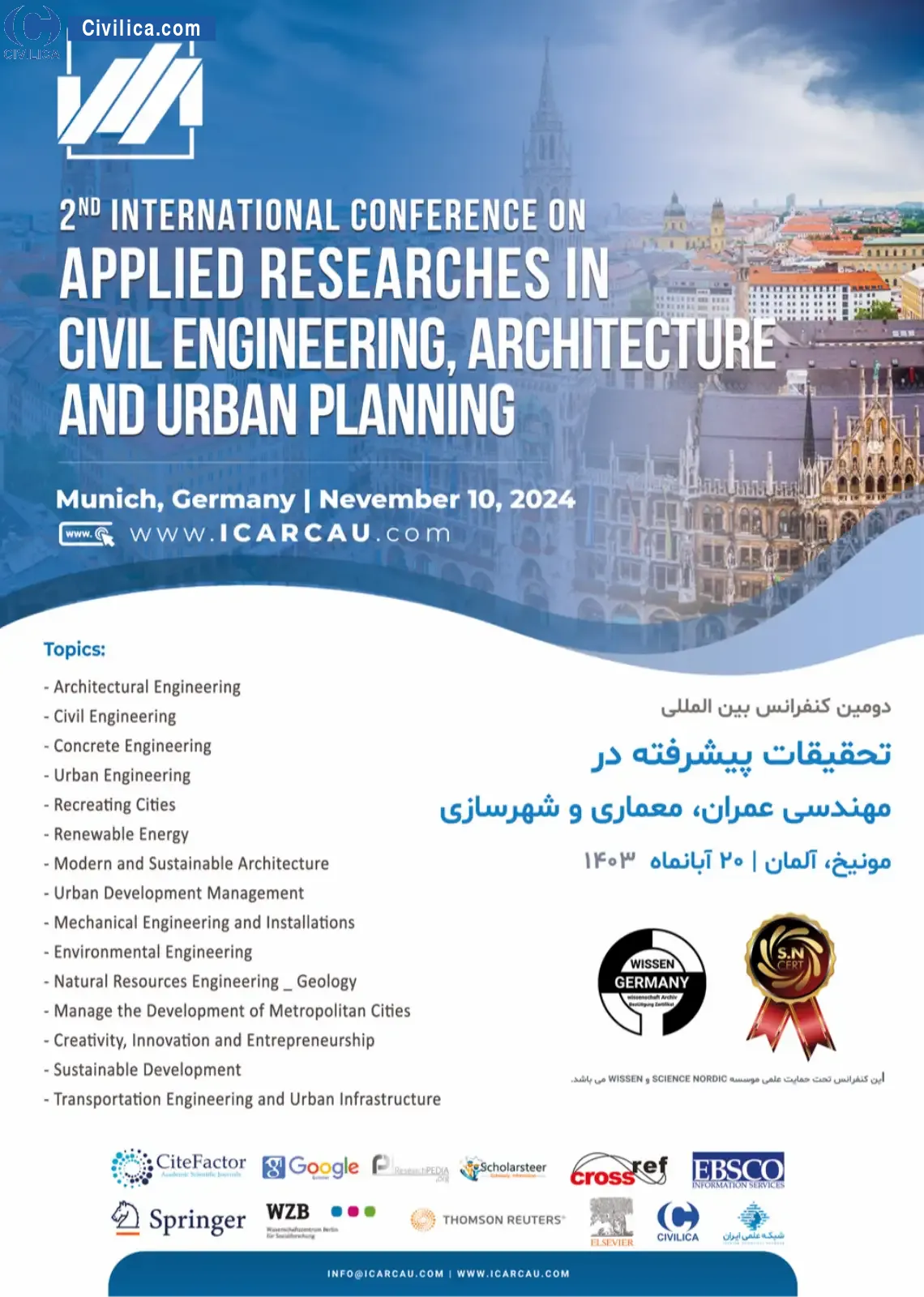 مجموعه مقالات دومین کنفرانس بین المللی تحقیقات پیشرفته در مهندسی عمران، معماری و شهرسازی20 آبان 1403