
چکیده مقاله
This review evaluates the performance of artificial intelligence AI driven predictive models compared to traditional econometric methods in economic forecasting Through a systematic literature review of thirteen studies, this article examines applications in bond yield forecasting, market trends, retail sales, GDP, inflation, finance, trade flows, and epidemiological forecasting e g , COVID ۱۹ AI methods, including deep neural networks, Long Short Term Memory LSTM , and machine learning ensembles, are compared to econometric models such as ARIMA, Vector Autoregression VAR , and GARCH Findings indicate that AI models consistently outperform traditional methods, reducing forecast errors by ۲۰ ۷۰% across metrics like Root Mean Square Error RMSE , Mean Absolute Error MAE , and Mean Absolute Percentage Error MAPE Notable improvements include ۷% lower errors in bond yield forecasting and ۲۰% reduced MAPE in finance forecasting However, challenges such as high computational requirements, data quality issues, and limited model interpretability persist This study synthesizes these findings to assess AI's potential in enhancing economic forecasting accuracy while highlighting practical limitations for implementation
کلیدواژهها
نویسندگان

Mohammad Bahrami
Msc student of business administration MBA , Department of Management, science and Technology, Amirkabir University of Technology, Tehran, Iran
شیوه ارجاع
Bahrami، Mohammad،1404،Advancing Economic Forecasting with AI: Outperforming Traditional Econometric Approaches،دوازدهمین کنفرانس بین المللی مدیریت، حسابداری، بانکداری و اقتصاد ایران،مشهد
ارائهشده در
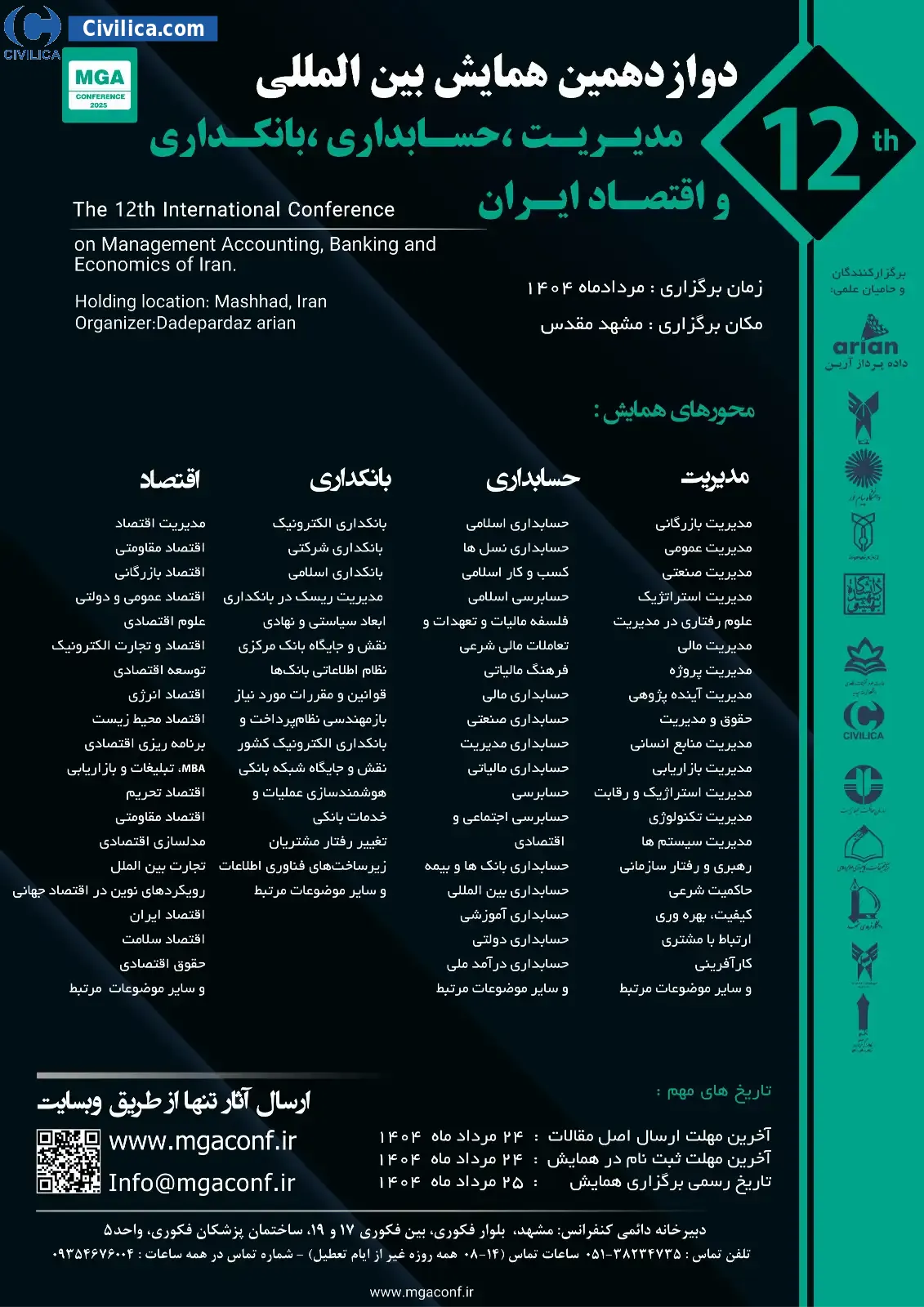 مجموعه مقالات دوازدهمین کنفرانس بین المللی مدیریت، حسابداری، بانکداری و اقتصاد ایران25 مرداد 1404 · مشهد