
چکیده مقاله
The integration of artificial intelligence AI into algorithmic trading has reshaped the efficiency and architecture of global financial markets While emerging economies such as India and Turkey have made notable progress through regulatory support and technological infrastructure, Iran has seen only limited and informal use of algorithmic trading tools, with no widespread or officially sanctioned implementation Despite a growing body of academic research in machine learning applications for financial forecasting, these efforts have not yet translated into live or testable trading systems This study explores the feasibility of adopting AI driven algorithmic trading in Iran It applies a structured framework to assess five key dimensions: technical readiness, regulatory environment, market conditions, economic sanctions, and institutional research capacity A comparative analysis with peer economies India, Turkey, and Pakistan helps contextualize Iran's position The findings indicate that Iran lacks the integrated legal, technical, and infrastructural ecosystem necessary for scalable adoption However, its academic foundation offers a valuable starting point The paper concludes with policy and research recommendations, including regulatory sandboxes, simulated trading environments, and university industry collaborations to bridge the current implementation gap
کلیدواژهها
نویسندگان

Zahra Sadat Mirhadi
M A Student in Finance, Khatam University, Tehran, Iran
Fazel Falahat
M A Student in Finance, Petroleum University of Technology, Tehran, Iran
شیوه ارجاع
Mirhadi, Zahra Sadat and Falahat, Fazel,1404,Feasibility of AI-Based Algorithmic Trading in Iran: A Comparative and Structural Assessment,The 13th International Conference on Management, Accounting, Banking and Economics in Iran,Mashhad
ارائهشده در
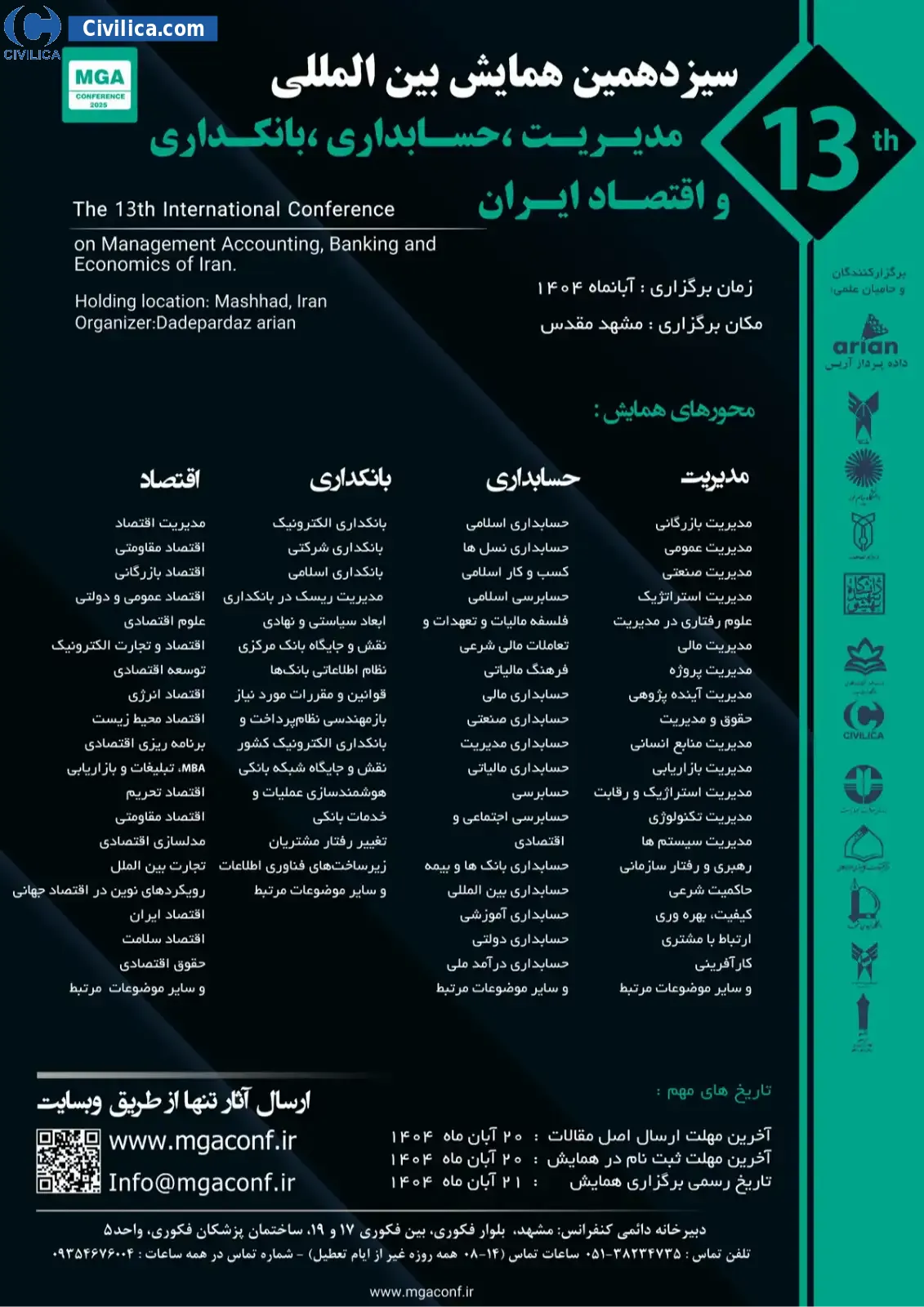 مجموعه مقالات سیزدهمین کنفرانس بین المللی مدیریت، حسابداری، بانکداری و اقتصاد ایران21 آبان 1404 · مشهد