چکیده مقاله
Urban technology diplomacy has emerged as a critical arena of geopolitical contestation in the twenty first century, wherein state and non state actors strategically export artificial intelligence–powered governance systems to establish technology spheres of influence This article examines how countries including China, the United States, and the European Union leverage smart city technologies—particularly AI driven urban management systems—as instruments of soft power and strategic influence Through analysis of case studies including China's City Brain initiative, Saudi Arabia's NEOM project, and the UAE's smart city ecosystem, this research identifies three distinct models of technology diplomacy: state directed development China , market driven innovation United States , and rights based regulation European Union The article reveals that AI powered urban governance exports function simultaneously as technical solutions, economic instruments, and mechanisms for extending geopolitical influence and establishing technology dependencies Key findings indicate that while smart city technology transfer promises efficiency gains and sustainable urban development, it simultaneously risks perpetuating digital colonialism, undermining data sovereignty, and entrenching surveillance capitalism in recipient nations The research demonstrates that effective urban technology diplomacy requires balancing innovation acceleration with regulatory safeguards, data protection frameworks, and mechanisms for genuine local agency This article contributes to scholarly understanding of how urban technology has become inseparable from great power competition, geopolitical strategy, and questions of technology sovereignty in the contemporary global order
کلیدواژهها
نویسندگان

Majid Khadem Ghasemi
M A student in Political Geography, Ferdowsi University of Mashhad, Iran
Mansoure Eskandaran
Ph D in Political Geography, Ferdowsi University of Mashhad, Iran Corresponding Author
شیوه ارجاع
Khadem Ghasemi, Majid and Eskandaran, Mansoure,1404,Urban Technology Diplomacy: Analyzing the Strategy of Exporting AI-Powered Urban Governance for Geopolitical Influence,11th National Conference and 4rd International Conference on Urban Planning and Management,Mashhad
ارائهشده در
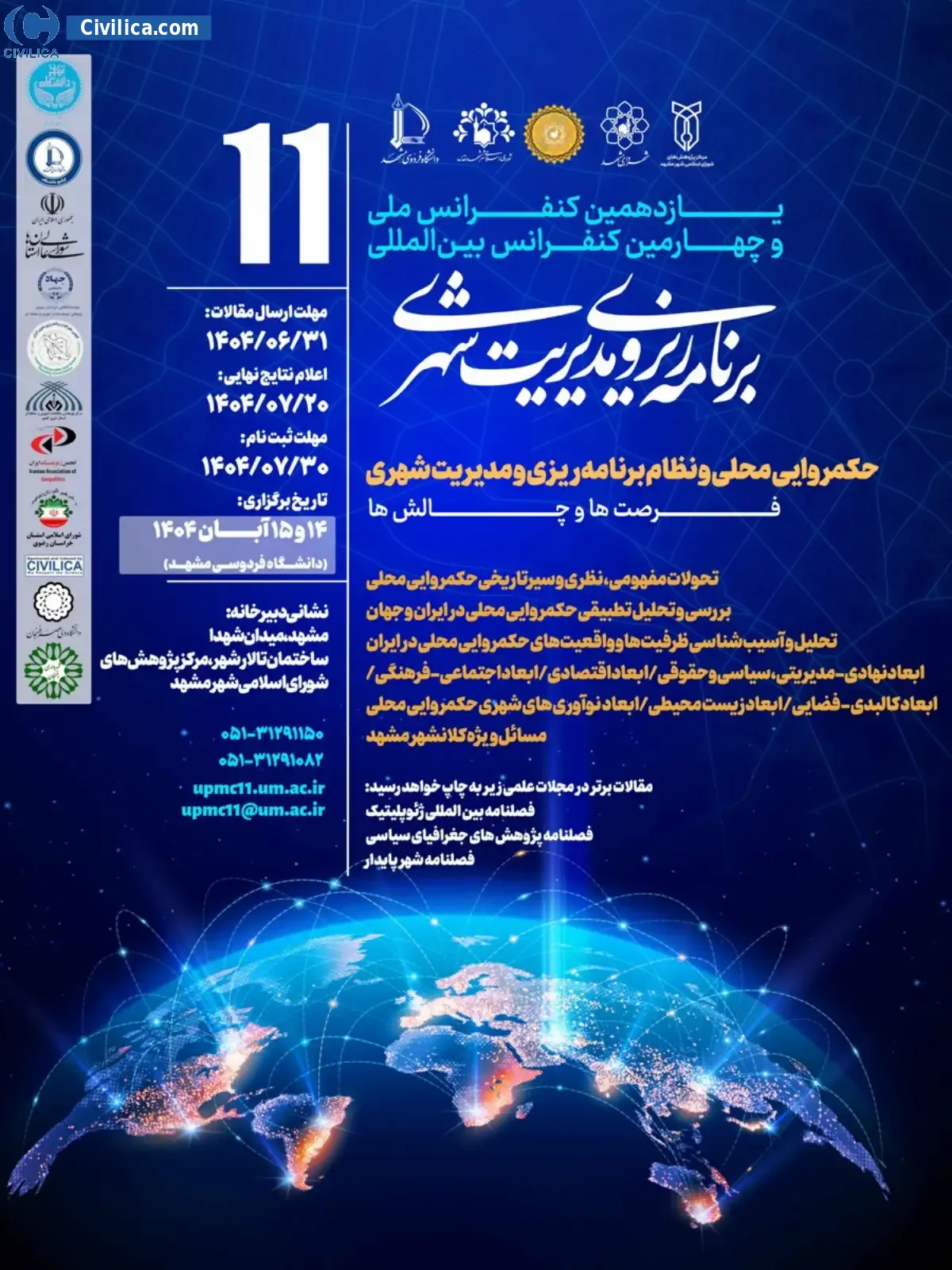 مجموعه مقالات یازدهمین کنفرانس ملی و چهارمین کنفرانس بین المللی برنامه ریزی و مدیریت شهری14 آبان 1404 · مشهد