
چکیده مقاله
The integration of automation and Artificial Intelligence AI istransforming the accounting profession, streamlining routine tasks,enhancing decision making capabilities, and reshaping the role ofaccountants This article explores the impact of these technologicaladvancements, highlighting the opportunities AI offers in predictiveanalytics, risk management, fraud detection, and client interactions While the benefits of increased efficiency and strategic insights areevident, the adoption of AI also introduces critical challenges, includingethical concerns surrounding data privacy, algorithmic bias, andtransparency The article emphasizes the importance of balancingtechnology with ethical standards, advocating for transparent andaccountable AI systems, and ensuring data security Additionally, itaddresses the potential for job displacement due to automation andunderscores the need for continuous learning and workforce reskilling toadapt to this evolving landscape Through strategic foresight and ethicalpractices, the accounting profession can fully harness the transformativepower of AI, ultimately enhancing its value to businesses and clients inthe digital age
کلیدواژهها
نویسندگان

فریدون مقدس نژاد
دانشیاردانشکده عمران و محیط زیست , دانشگاه صنعتی امیرکبیر
Sasan Khademi
Ph D, Lecturer of Accounting in Imam Ali Officers' University
احمد حداد
دانشجوی کارشناسی ارشدعمران-راه و ترابری , دانشگاه آزاد اسلامی واحد علوم و تحقیقات شاهرود
شیوه ارجاع
Khademi, Sasan,1403,Automation and Artificial Intelligence (AI) in Accounting: Opportunities, Ethical Challenges, and theEvolving Role of Accountants,The 7th international conference on key researches in management, accounting, banking and economics,Mashhad
ارائهشده در
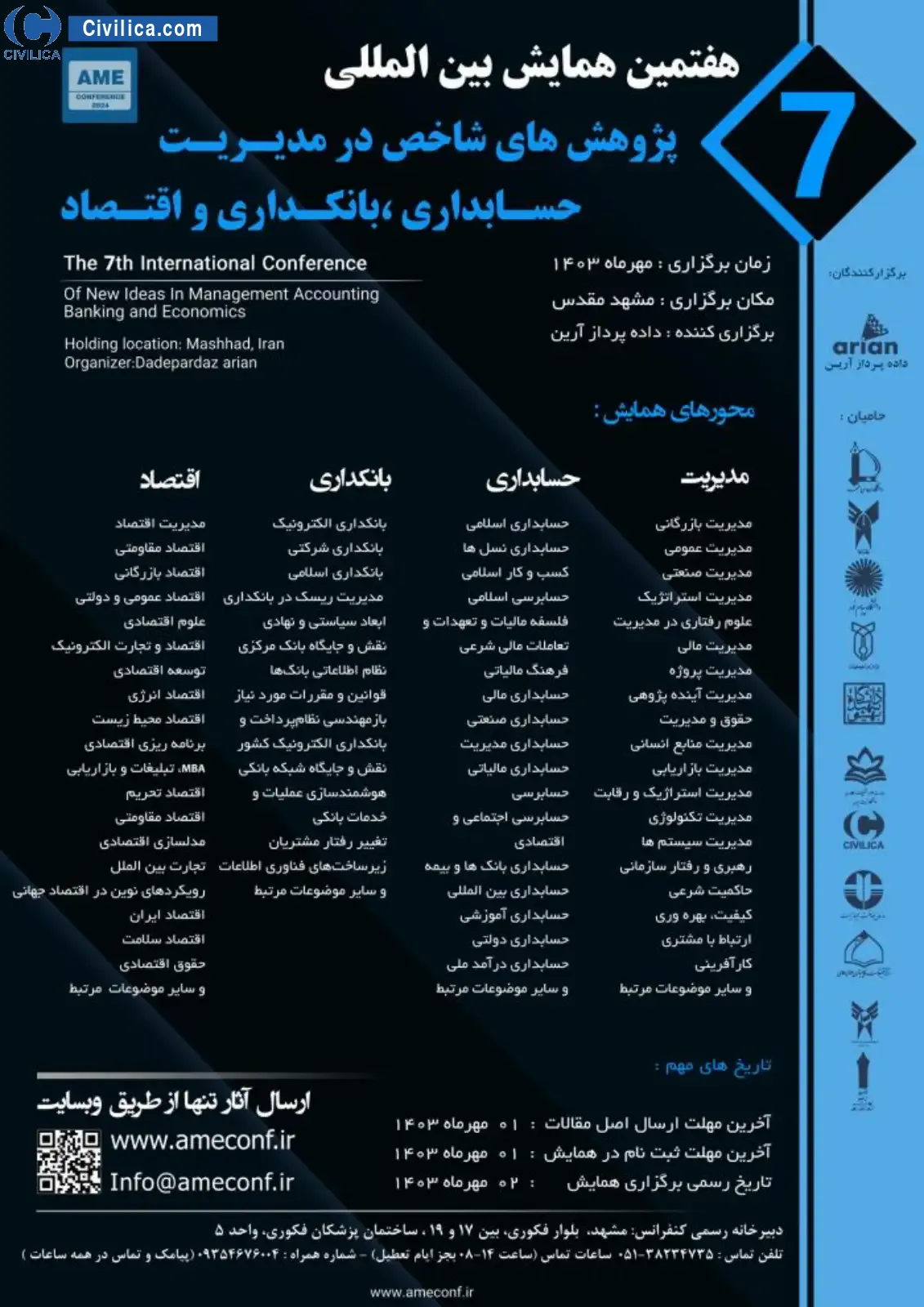 مجموعه مقالات هفتمین همایش بین المللی پژوهش های شاخص در مدیریت، حسابداری، بانکداری و اقتصاد2 مهر 1403 · مشهد