
چکیده مقاله
The COVID 19 pandemic has had a profound impact on the world, affecting both physical and mental health While vaccination efforts have helped to reduce the spread of the virus, many individuals continue to experience long term effects from COVID 19, known as long COVID This includes a range of symptoms such as fatigue, shortness of breath, and cognitive difficulties that can persist for weeks or even months after the initial infection These symptoms can significantly impact an individual’s quality of life and ability to perform daily activities In addition to the physical symptoms of long COVID, the pandemic has also taken a toll on mental health Studies have shown increased rates of anxiety and depression globally, as individuals grapple with the stress and uncertainty of the pandemic Social isolation, financial insecurity, and fear of contracting the virus have all contributed to this mental health crisis Therefore, it is crucial to address both the physical and mental health impacts of the pandemic to promote overall well being Fortunately, a range of interventions are available to help manage the long term effects of COVID 19 and support mental health Physical activity has been shown to have numerous benefits, including improving cardiovascular health, reducing fatigue, and boosting mood Eating a healthy diet, such as the Mediterranean diet, may also help to alleviate symptoms of nonalcoholic fatty liver disease, which has been linked to COVID 19 Psychotherapy is another effective intervention for addressing mental health concerns Cognitive behavioral therapy CBT and other forms of talk therapy can help individuals develop coping strategies for managing anxiety and depression Mindfulness practices, such as meditation and yoga, have also been shown to reduce stress and improve mental well being It is essential to take a holistic approach to managing the long term effects of COVID 19, addressing both physical and mental health concerns By incorporating strategies such as physical activity, healthy eating, and psychotherapy, individuals can take steps towards improving their overall well being and quality of life As the world continues to navigate the ongoing pandemic, prioritizing health and wellness will be critical in promoting resilience and recovery Introduction: The COVID 19 pandemic has had a significant impact on global health, with millions of individuals affected by the disease worldwide While some individuals recover from the disease without long lasting symptoms, others experience a range of persistent symptoms, commonly referred to as “long COVID ” These symptoms can include fatigue, shortness of breath, cognitive difficulties, anxiety, and depression, among others Self care practices have been proposed as a potential means to alleviate these symptoms and improve long term outcomes for individuals with COVID 19 1 Methods: We conducted a systematic review of the literature to examine the potential impact of self care practices on long lasting COVID 19 symptoms 2 We searched the PubMed, Cochrane Library, and Embase databases for relevant studies published between January 2020 and June 2021 3 We included studies that examined the impact of self care practices on long lasting COVID 19 symptoms, such as fatigue, shortness of breath, cognitive difficulties, anxiety, and depression 4 We excluded studies that focused on acute COVID 19 symptoms or did not report on the impact of self care practices 5 Results: We identified a total of 42 studies that met our inclusion criteria 6 These studies examined a range of self care practices, including exercise, mindfulness based interventions, dietary interventions, and sleep hygiene, among others 7 Several studies reported that exercise interventions, such as aerobic exercise and resistance training, were effective in reducing fatigue and improving physical function in individuals with long COVID 8 9 Mindfulness based interventions, such as meditation and yoga, were found to be effective in reducing symptoms of anxiety and depression 10 11 Additionally, dietary interventions, such as the Mediterranean diet, were associated with improvements in fatigue and other symptoms 12 13 Sleep hygiene interventions, such as improving sleep quality and duration, were also found to be effective in reducing symptoms such as fatigue and cognitive difficulties 14 15
نویسندگان

Mohammad Gholipour
Bahman Hospital, Deputy of Treatment, Iranian Social Security Organization, Tabriz, Iran
Seyedeh Farzeh Razavi Ghazani
Tabriz Nursing and Midwifery School, Tabriz University of Medical Sciences, Tabriz, Iran
شیوه ارجاع
Gholipour, Mohammad and Razavi Ghazani, Seyedeh Farzeh,1402,how self-care practices can impact long-lasting COVID-19 symptoms,The fourteenth international conference on health, treatment and health promotion
ارائهشده در
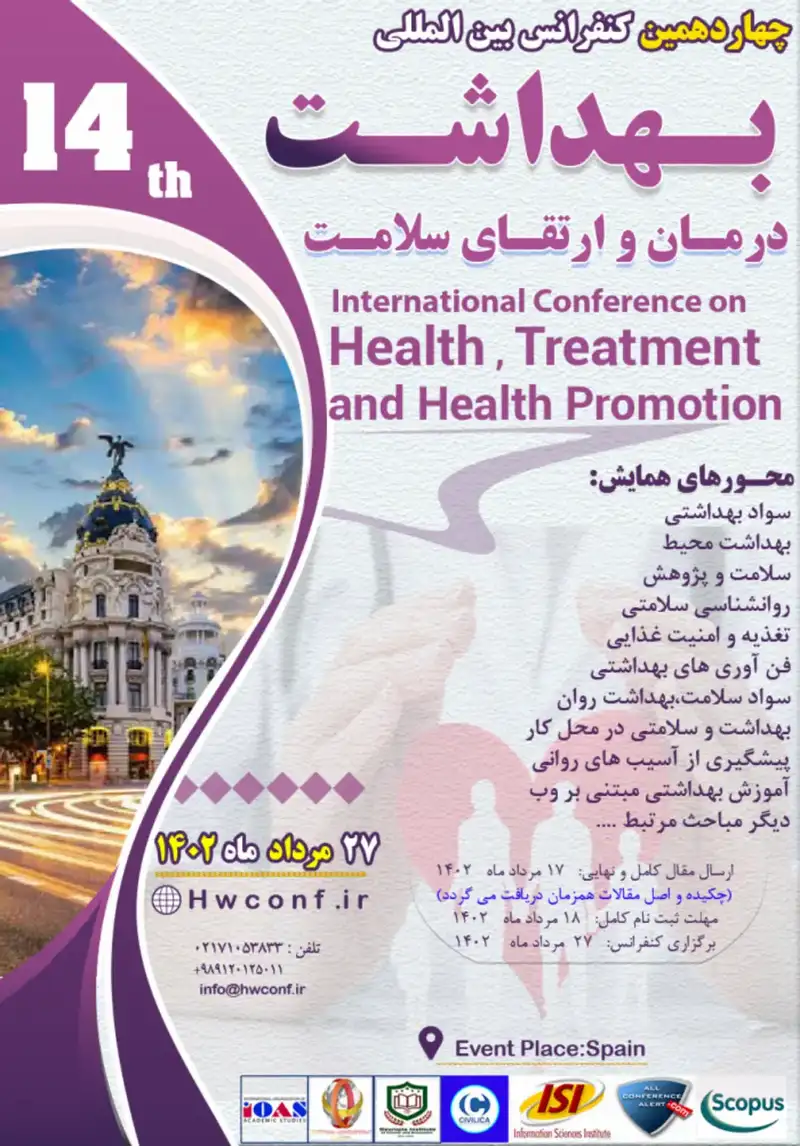 مجموعه مقالات چهاردهمین کنفرانس بین المللی بهداشت، درمان و ارتقای سلامت27 مرداد 1402