
چکیده مقاله
Emotional Intelligence EI plays a crucial role in the success of language learning by influencing learners’ motivation, strategy use, and overall academic performance This study explores the relationship between EI and language learning strategies among Iranian intermediate EFL learners, aiming to understand how emotional factors contribute to effective language acquisition Drawing from empirical research, the study highlights that learners with higher EI demonstrate greater adaptability, self regulation, and interpersonal skills, which enhance their ability to employ effective learning strategies Findings indicate that specific EI components, such as self awareness, stress management, and social skills, significantly correlate with language learning success Moreover, high EI learners tend to use metacognitive and cognitive strategies, while lower EI learners rely more on memory and social strategies The study suggests that integrating EI based approaches into language learning curricula can foster higher engagement, resilience, and proficiency Ultimately, EI serves as a bridge to success, enabling learners to navigate challenges, stay motivated, and optimize their language learning experiences
کلیدواژهها
نویسندگان

Farima Ebrahimi TileNoei
Degree of Master of Arts in Teaching English as a Foreign Language TEFL Islamic Azad University, Sari Branch
شیوه ارجاع
Ebrahimi TileNoei, Farima,1404,Emotional Intelligence as a Bridge to Success in Language Learning,21th International Conference on Language , Literature , Culture and History Studies
ارائهشده در
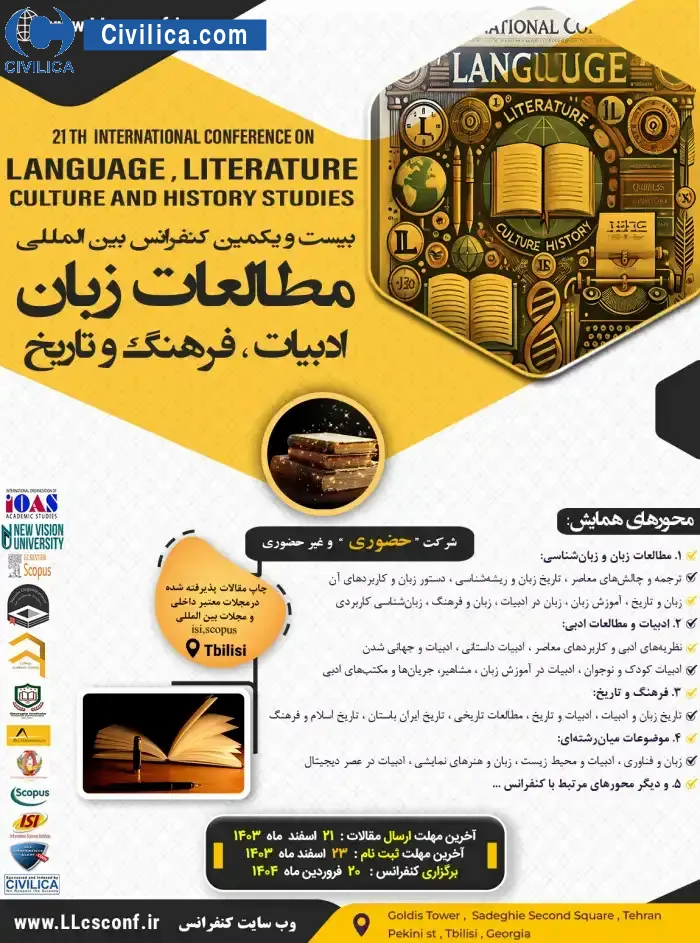 مجموعه مقالات بیست و یکمین کنفرانس بین المللی مطالعات زبان، ادبیات، فرهنگ و تاریخ20 فروردین 1404