
چکیده مقاله
Humanism is an intellectual movement that underscores the significance of human beings and the role of rational thought Within this framework, anthropocentrism posits that humans occupy a central position in the hierarchy of existence, asserting their superiority over machines, animals, and other non human entities; however, posthumanism contests this human exceptionalism by recognizing that humans do not hold inherent superiority over non human entities Posthumanism, evolving from postmodernism, interrogates foundational divisions within Western philosophy and the boundaries separating humans, animals, and machines In this context, the concept of the 'cyborg' has emerged as an important area of investigation The cyborg, a fusion of machine and organism, embodies the posthuman body by illustrating the integration of humans and technology, thereby deconstructing traditional notions of body and identity associated with humanism In fact, this article aims to explore the transformative implications of cyborgism in reconfiguring identity in a posthuman world, challenging traditional humanist notions of the 'self' and human exceptionalism In conclusion, embracing the cyborg as a metaphor for hybrid existence encourages a reevaluation of human identity in an increasingly technological landscape, opening pathways for new understandings of what it means to be human
کلیدواژهها
نویسندگان

Fatemeh Mozafari
M A in English Literature, Faculty of Persian Literature and Foreign Languages, University of Tabriz, Tabriz, Iran
شیوه ارجاع
Mozafari, Fatemeh,1404,From Humanism to Cyborgism: Examining the Reconfiguration of the Self in a Posthuman World,21th International Conference on Language , Literature , Culture and History Studies
ارائهشده در
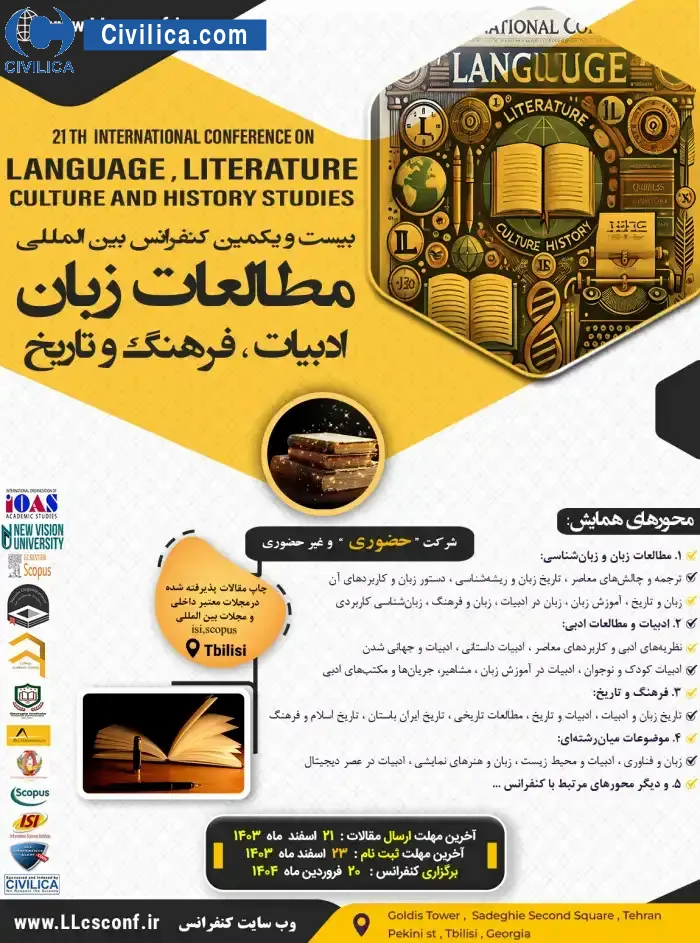 مجموعه مقالات بیست و یکمین کنفرانس بین المللی مطالعات زبان، ادبیات، فرهنگ و تاریخ20 فروردین 1404