
چکیده مقاله
Humpty Dumpty sat on the wall Humpty Dumpty had a great fall All the king’s horses and all the king’s men Couldn’t put Humpty together again Francis Bartlett Kellogged 1882 Inspired by an article “Homophonic translation as Humpty Dumpty’s Choice by Nadezhda N Efimova, Maria L Ruzhnikova and Marina I Violina”, I contributed this book It told me the translation process is an “egg” that gad a great fall But I believe that English translation is more complex than an egg, despite their similarities This text is based on this my finding Here, I discuss about the similarities and differences between Humpty Dumpty and English translation I divided this content to four parts: Homophony homophonic , Soramimi, Humpty Dumpty and final discussion Humpty Dumpty is a character in an English nursery rhyme that first, was written by Francis Bartlett Kellogged in 1882 This character as an egg found his way in English literatures and a theory based on homophonic patterns In other word, homophonic translation is “soramimi” We can understand both of them just by hearing In one word, it literally means air ear; mishearing In literal translation means air and ear Their hearing patterns are equal and similar At first glance, it may be funny but has a key role in English translation This manuscript describes it and its interpretation briefly
کلیدواژهها
نویسندگان

Samira Rezaii Moqaddam
MA student of English Translating
شیوه ارجاع
Rezaii Moqaddam, Samira,1404,My Finding: Is “Soramimi” a fun?,21th International Conference on Language , Literature , Culture and History Studies
ارائهشده در
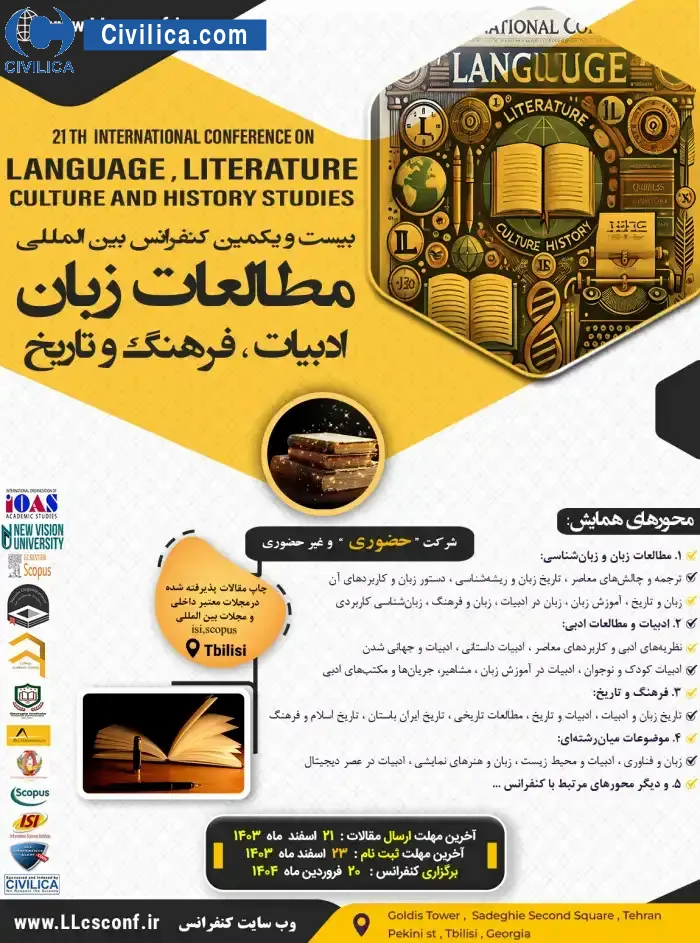 مجموعه مقالات بیست و یکمین کنفرانس بین المللی مطالعات زبان، ادبیات، فرهنگ و تاریخ20 فروردین 1404