چکیده مقاله
This paper was conducted to evaluate the necessity of incorporating Iranian epistemologies into psychometric testing to enhance cultural relevance and sensitivity Traditional psychometric tests often fail to measure knowledge grounded in Iranian ways of knowing, highlighting the need for a more inclusive approach This study examined how aspects of Iranian epistemologies can inform and enrich psychometric testing practices through a comprehensive literature review The paper identified communalism, oral tradition, holism, spiritualism, and creativity as key elements with implications for psychometric testing Communalism emphasizes collective identities and consensus building, contrasting with Western frameworks' individualistic focus Oral tradition encompasses transmitting knowledge through storytelling, poems, and proverbs, diverging from relying on written texts in traditional testing Holism views phenomena as interconnected wholes rather than isolated parts, challenging the reductionist nature of conventional testing methods Spiritualism recognizes the inseparability of the transcendent and immanent, which challenges secular psychometrics Lastly, creativity places value on improvisation, flexibility, and innovation, suggesting alternative conceptions of intelligence beyond rigid measurement Psychometric testing can expand its scope and better capture the diverse ways of knowing by incorporating and assessing these Iranian aspects The findings of this paper contributed to the development of culturally sensitive and inclusive psychometric testing practices, promoting equity and embracing the richness of Iranian epistemologies
کلیدواژهها
نویسندگان

Hamed Ghaeimi
Bahar Institute of Higher Education,Iran
Fatemeh Seyedi
Bahar Institute of Higher Education,Iran
Noushin Mozayani
Bahar Institute of Higher Education,Iran
شیوه ارجاع
Ghaeimi, Hamed and Seyedi, Fatemeh and Mozayani, Noushin,1403,Psychological Assessment And Placement Practices Of Children With Dyslexia: A Cognitive Assessment Model In Iran,1st international conference on modern studies in psychology, educational sciences, social sciences and education,Tehran
ارائهشده در
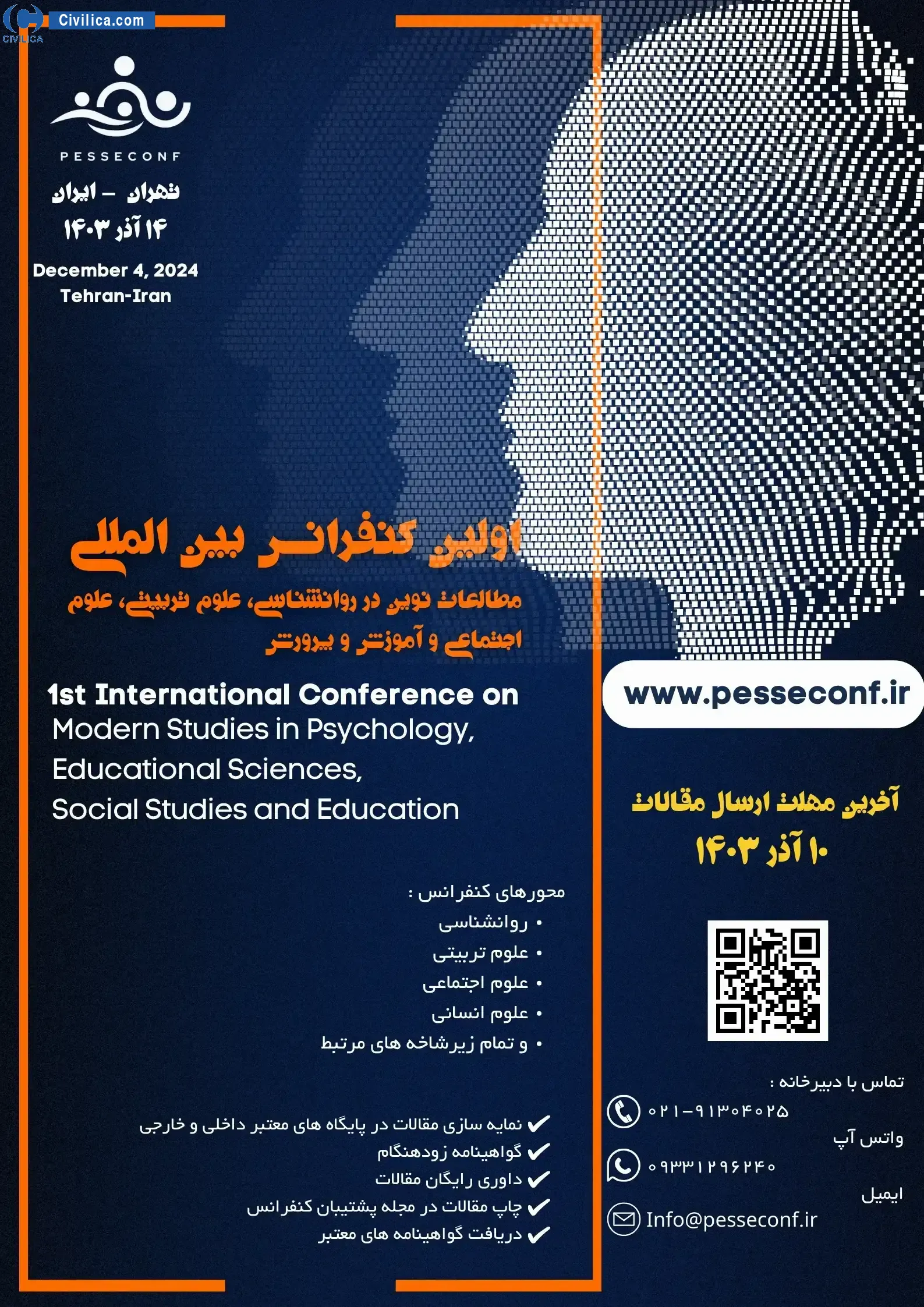 مجموعه مقالات اولین کنفرانس بین المللی مطالعات نوین در روانشناسی، علوم تربیتی، علوم اجتماعی و آموزش و پرورش14 آذر 1403 · تهران