
چکیده مقاله
Introduction: Urbanization and technological advances have changed how and where we work, travel, and play People spend longer hours at the computer, and the Internet and e mail dominate work and communication In many countries, cars dominate transportation, causing congestion and traffic jams Cardiovascular diseases are the most common cause of death in most countries in the world, including Iran, and the leading cause of disability In 2008, 17 3 million deaths due to cardiovascular diseases were reported worldwide, 20% of which occurred in low and middle income countries, and it is predicted that by 2030, more than 23 million deaths due to cardiovascular diseases will occur annually worldwide Cardiovascular diseases also account for 33% of deaths from noncommunicable diseases in people under 70 years of age According to the World Health Organization, 45% of all deaths in Iran in 2011 were due to heart disease One of the risk factors associated with cardiovascular disease and mortality is metabolic syndrome People with metabolic syndrome are three to five times more likely to develop cardiovascular disease and mortality than people without the condition Currently, about a quarter of American adults and 30% of Iranian adults have metabolic syndrome If metabolic syndrome is present, the mortality rate of those affected increases by 20 to 80% Methodology: Anthropometric variables and body fat percentage of employees were measured Also, 5 ml of venous blood sample was taken from each subject in a fasting state 12 hours in an approved laboratory and blood variables were measured Metabolic syndrome was diagnosed using the International Diabetes Federation IDF index Beck questionnaire was used to measure physical activity level For all statistical tests, a significance level of less than 0 05 was considered Findings: 53% of employees had low physical activity levels, 34 3% had moderate physical activity levels, and 12 7% had high physical activity levels 58 29% of employees were overweight and 38 2% were obese in terms of BMI 16 2% of people were prediabetic fasting blood sugar between 100 and 125 mg/dL and 10 4% had diabetes fasting blood sugar greater than 126 mg/dL Also, 14 6% of employees had hypertension In examining the prevalence of metabolic syndrome based on the International Diabetes Federation IDF index, the results showed that 18 4% of employees had metabolic syndrome Conclusions: Some of the employees were not in a good condition in terms of cardiovascular risk factors, metabolic syndrome, and fatty liver The risk of metabolic syndrome prevalence was lower in employees who had a higher level of physical activity, and having a high level of physical activity could be an effective strategy in controlling some cardiovascular risk factors and components of metabolic syndrome
کلیدواژهها
نویسندگان

شیوه ارجاع
Azmoon Zavie Kivi, Hamidreza,1404,The effect of exercise on the prevention of metabolic and cardiovascular diseases in urban communities (Case study: municipal employees),The first international conference on civic sport and sustainable development,Tehran
ارائهشده در
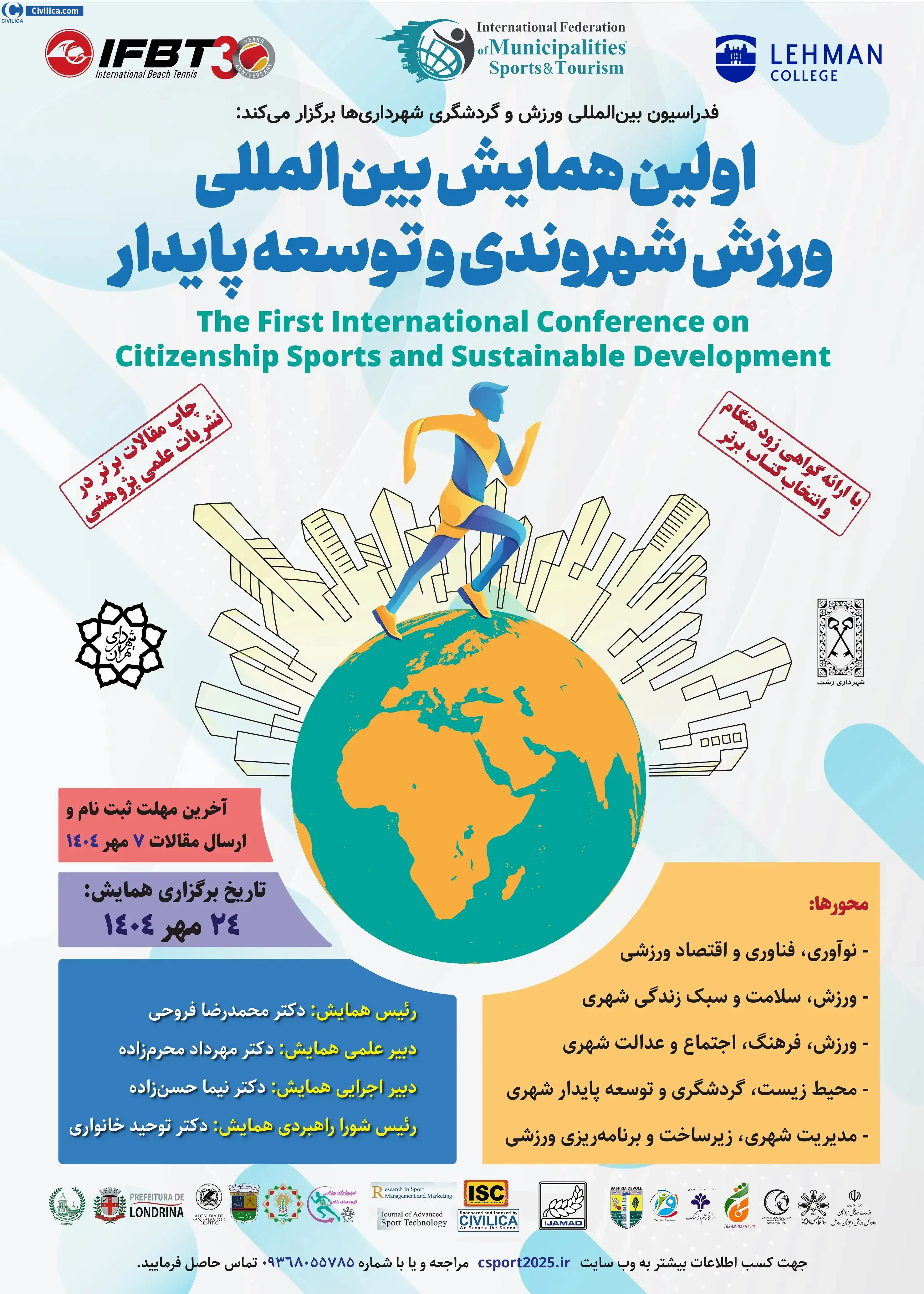 مجموعه مقالات اولین همایش بین المللی ورزش شهروندی و توسعه پایدار24 مهر 1404 · تهران