
چکیده مقاله
Generally, trip generation models are the regression function relating the quantity of trips generated in a zone and attracted to a zone with the socioeconomic factors, thereat; for produced trips of each zone, refueling and energy consumption accounted to individual fuel economy standard urban driving cycle is used in calculation of vehicle distance travel Trip production is calculated through vehicle distance travel, observed average trip length and car occupancy rate Attraction model computed based on water and electricity consumer s magnitude for commercial, public and industrial, have constructed a weighting factor which is multiplied to total number of production to develop the number of attraction for each zone Therefore, attraction and production are compared and balanced technically and evaluated continually Trip Length Frequency Distribution TLFD , as the most sensible outcomes of fuel data, is implemented in the calibration of the gravity model for trip distribution process It helps to have impedance function as the representative for the spatial separation of each zone This process covered all vehicular trips in urban areas, which is rare in TDFMs Bureau of Public Roads BPR algorithm determined friction factors average value of 2 1 for gravity model with an iterative process based on vehicle distance traveled Surprisingly, theresulted factors based on refuel data do not follow with old functional forms trends and patterns, which used to drive the travel distance factor magnitude from travel distance in recent study or time factor in major of studies
کلیدواژهها
نویسندگان

Ali Hakimelahi
Ph D in Transportation and Traffic Engineering
K.V Krishna Rao
Professor, IIT Bombay, Mumbai, India
S.L. Dhingra
Professor, IIT Bombay, Mumbai, India
Farideddin Peiravian
Assistant Professor, Shiraz University
شیوه ارجاع
Hakimelahi, Ali and Krishna Rao, K.V and Dhingra, S.L. and Peiravian, Farideddin,1396,Transportation Planning and Trip Distribution by Trip Length Frequency Distribution with Fuel Data,The 17th International Conference on Traffic and Transportation Engineering,Tehran
ارائهشده در
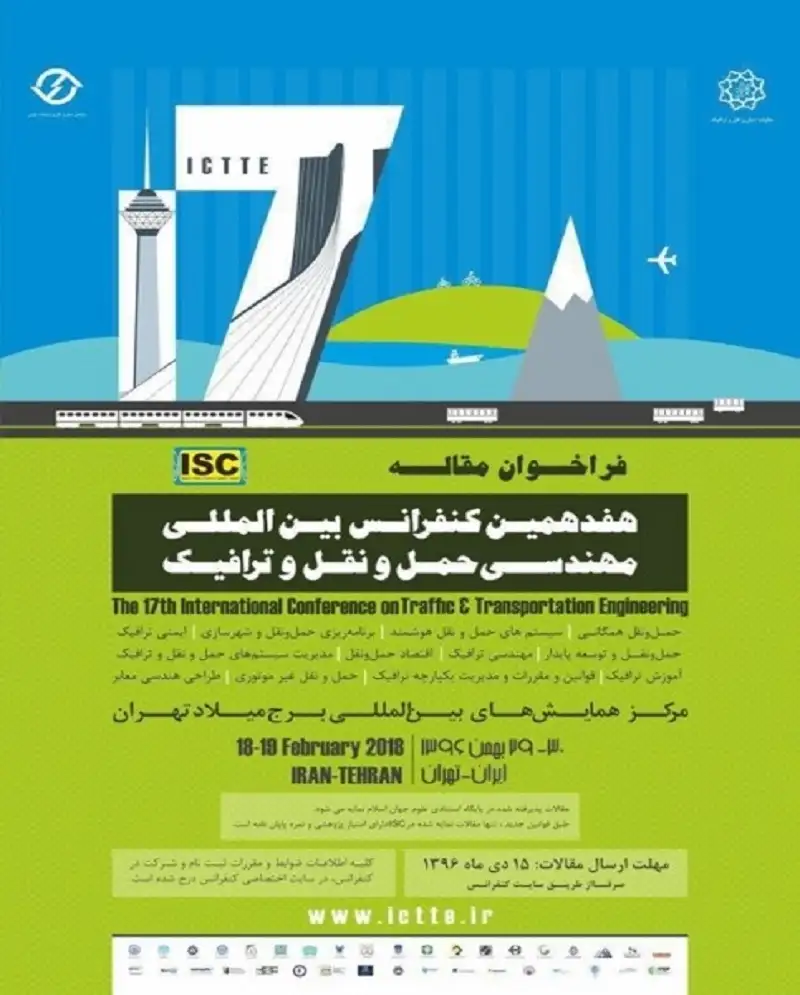 مجموعه مقالات هفدهمین کنفرانس بین المللی مهندسی حمل و نقل و ترافیک29 بهمن 1396 · تهران