
چکیده مقاله
In the context of the psychological aftermath of the recent Iran Israel war, this paper explores the neurobiological and psychological dimensions of trauma, focusing on the dual outcomes of post traumatic stress disorder PTSD and post traumatic growth PTG While PTSD has traditionally been viewed as a debilitating consequence of trauma, recent research highlights PTG as a potential adaptive response, characterized by positive psychological and neurological changes Through a systematic review and thematic analysis of studies published between ۲۰۰۰ and ۲۰۲۵—drawn from academic databases such as SID, Google Scholar and ScienceDirect—this research examines the relationship between childhood trauma and PTSD, with the aim of identifying neurobiological markers and informing resilience building interventions Findings suggest that distinct brain regions, including the amygdala, hippocampus, and prefrontal cortex, play differential roles in the development of PTSD versus PTG The review underscores the importance of cognitive processing, coping strategies, and social support in fostering growth, and recommends interdisciplinary approaches to better understand trauma related outcomes
کلیدواژهها
نویسندگان

Tayebe Pahlevan
Department of Psychology, University of Science and Culture,
Mobina Bigham
Department of Psychology, HakimToos University
Zahra Ebrahimi DashtBayaz
Azad University of Mashhad Department of Psychology
شیوه ارجاع
Pahlevan، Tayebe و Bigham، Mobina و Ebrahimi DashtBayaz، Zahra،1405،A Review of Neurobiological Differences on PTSD and PTG in War Survivors،یازدهمین کنفرانس بین المللی و چهاردهمین همایش ملی مدیریت، روان شناسی و علوم رفتاری،تهران
ارائهشده در
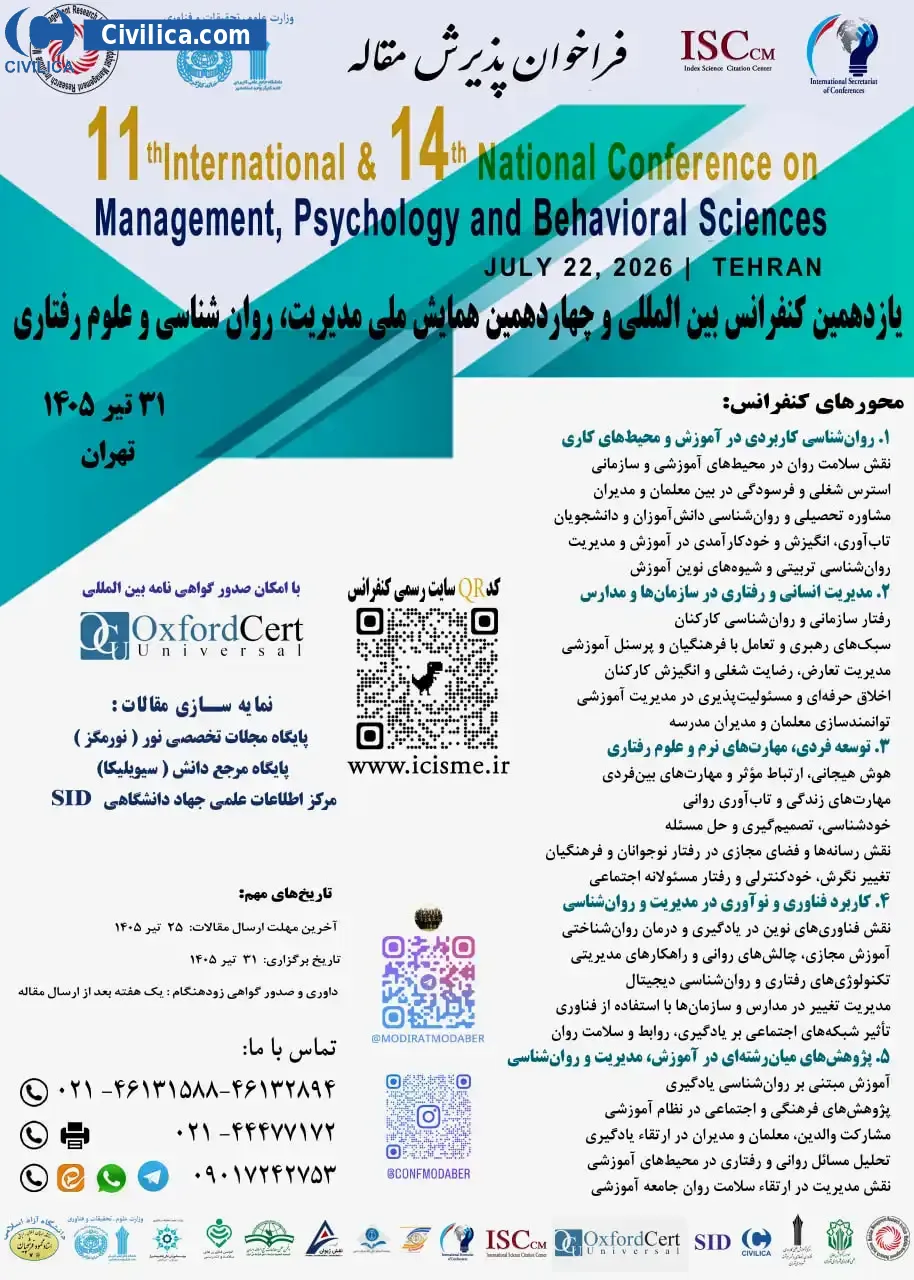 مجموعه مقالات یازدهمین کنفرانس بین المللی و چهاردهمین همایش ملی مدیریت، روان شناسی و علوم رفتاری31 تیر 1405 · تهران