
چکیده مقاله
This study assesses how prepared Iranian insurance companies are for emerging environmental risk standards within global climate risk supervision frameworks By comparing regulatory developments and supervisory practices across 28 countries in Europe, Asia, and North America since 2018, and analyzing strategies of 45 major insurers in vulnerable regions, it highlights key gaps and opportunities for Iran The findings identify three essential elements for effective climate risk supervision: increased investment in data infrastructure averaging 40% growth , use of dynamic risk assessment models with forward looking scenarios, and dedicated governance structures for environmental risks The analysis shows that emerging market insurers adopting proactive climate risk frameworks achieve 23% better solvency ratios and 18% greater operational resilience than reactive adopters Huang et al, 2022 For Iranian insurers, applying simplified versions of the European Insurance and Occupational Pensions Authority EIOPA guidelines, alongside regionally tailored stress tests, provides a practical path to international compliance The study concludes that focusing on technological upgrades and workforce training is crucial, with phased implementation over 24 36 months proving most effective in similar markets
کلیدواژهها
نویسندگان

Fatemeh Shaterzaryab
Zeinab Rostami
Zeinab Rostami
Fatemeh Shaterzaryab
شیوه ارجاع
Shaterzaryab, Fatemeh and Rostami, Zeinab,1404,Environmental Risk Standards and Climate Supervision: A Comparative Analysis for Iranian Insurance Market Integration,The 32nd National Conference and the 13th International Conference on Insurance and Development: 'Reimagining Supervision in Insurance: An Innovative Path toward Effective Regulation',Tehran
ارائهشده در
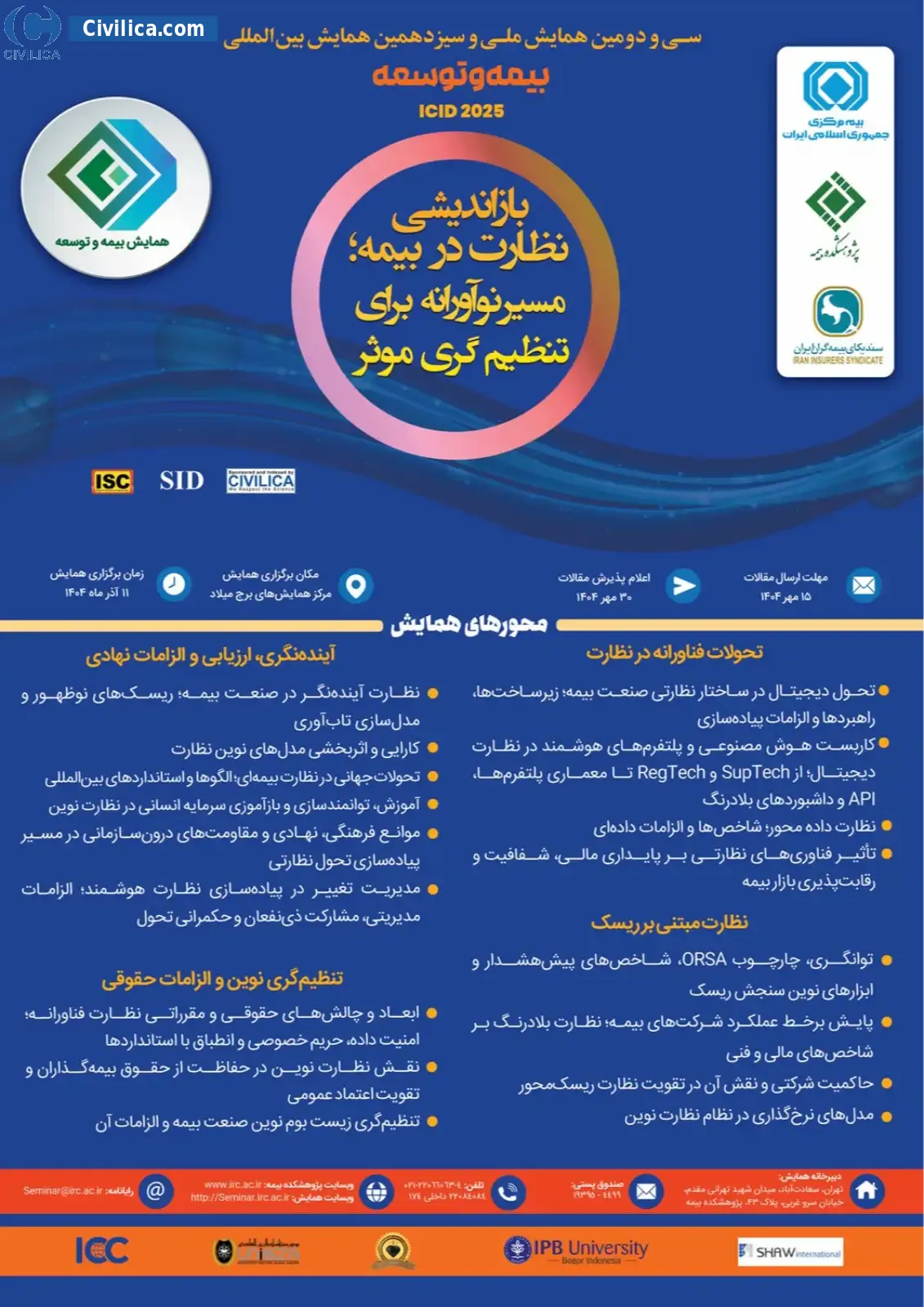 مجموعه مقالات سی ودومین همایش ملی و سیزدهمین همایش بین المللی بیمه و توسعه با عنوان: «بازاندیشی نظارت در بیمه؛ مسیر نوآورانه برای تنظیم گری موثر»11 آذر 1404 · تهران