
چکیده مقاله
Regulatory reforms in insurance aim to improve stability, consumer protection, and resilience, yet are often obstructed by interconnected cultural, institutional, and organizational barriers Cultural resistance stems from entrenched values and symbolic compliance; institutional inertia arises from rigid laws, fragmented oversight, and bureaucracy; organizational resistance emerges from status quo bias, resource competition, and internal politics This paper analyses how these barriers interact and amplify each other, drawing on global case studies that demonstrate effective mitigation through cultural engagement, adaptive governance, and organizational alignment A six step framework—resistance mapping, co design, pilot implementation, adaptive scaling, monitoring, and institutionalized learning—is proposed, alongside scenario planning to anticipate reform trajectories Findings show that tri level, sequenced strategies and blending central coordination with localized innovation can transform resistance into resilience Policy recommendations emphasize principle based regulation, incentives for organizational change, and protection of reforms from political cycles, ensuring reforms are not only formally adopted but operationally embedded
کلیدواژهها
نویسندگان

Azarakhsh Jam
Saied Zarrodi
Saied Zarrodi
Azarakhsh Jam
شیوه ارجاع
Jam, Azarakhsh and Zarrodi, Saied,1404,Navigating Cultural and Institutional Challenges in Implementing Regulatory Reforms in Insurance,The 32nd National Conference and the 13th International Conference on Insurance and Development: 'Reimagining Supervision in Insurance: An Innovative Path toward Effective Regulation',Tehran
ارائهشده در
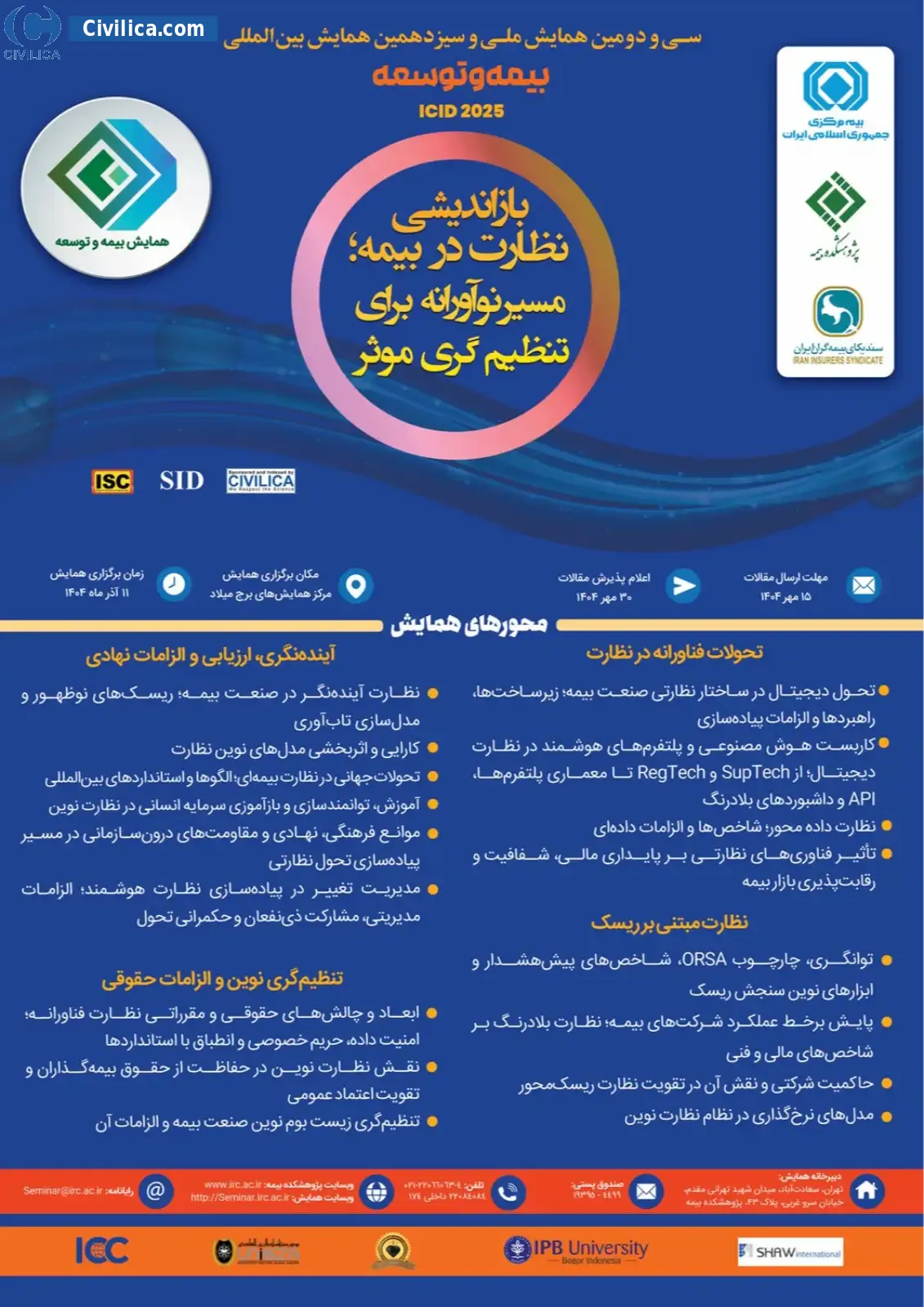 مجموعه مقالات سی ودومین همایش ملی و سیزدهمین همایش بین المللی بیمه و توسعه با عنوان: «بازاندیشی نظارت در بیمه؛ مسیر نوآورانه برای تنظیم گری موثر»11 آذر 1404 · تهران