
چکیده مقاله
Waste generation is one of the direct consequences of human activities, which has been intensified by population growth, urbanization, and lifestyle changes The increasing volume and diversity of wastes pose a serious threat to human health, ecosystems, and economic resources Improper waste management leads to extensive health, environmental, and economic impacts and requires a scientific and engineering based approach This article reviews the history of waste generation, its classifications, sources, and characteristics, as well as the consequences of improper management, key challenges, and modern management methods It further examines the role of environmental engineering and the Integrated Solid Waste Management ISWM model in mitigating adverse effects and promoting sustainable development The findings indicate that combining strategies such as waste reduction at the source, reuse, recycling, energy recovery, and final disposal not only minimizes environmental impacts but also creates new economic and social opportunities while strengthening green governance
کلیدواژهها
نویسندگان

Pouya Amjadyan
Master’s student in Civil Engineering Environmental Engineering specialization , Tarbiat Modares University, Tehran, Iran
نادر مختارانی
Associate Professor in Civil Engineering Environmental Engineering specialization , Tarbiat Modares University, Tehran, Iran
شیوه ارجاع
Amjadyan, Pouya and Mokhtarani, Nader,1404,Sustainable Waste Management: Challenges, Strategies, and Its Role in Environmental Engineering,The 3rd National Conference on Environmental Challenges: The role of industry, mining, and society in developing green governance,Tehran
ارائهشده در
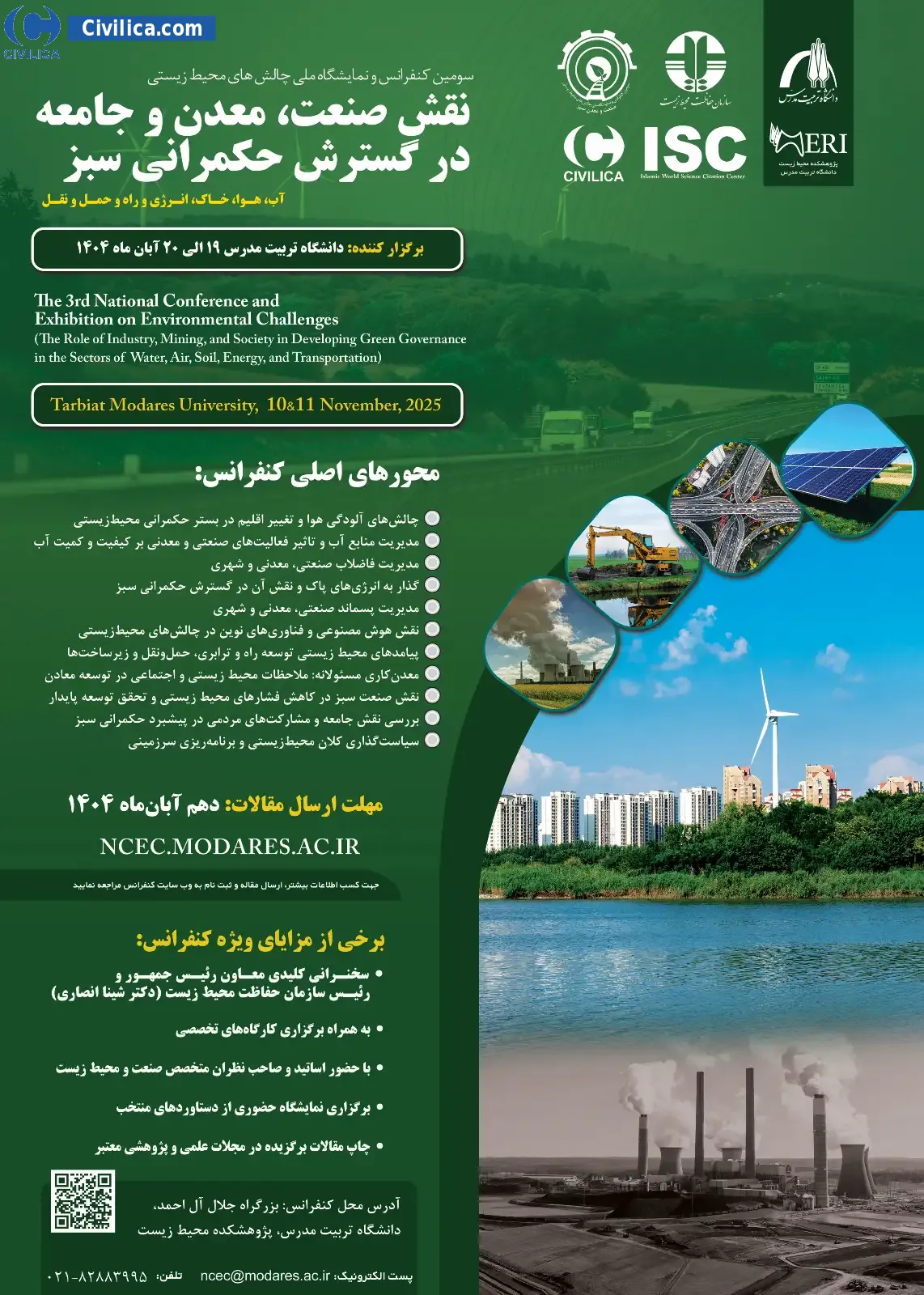 مجموعه مقالات سومین کنفرانس و نمایشگاه ملی چالش های محیط زیستی: نقش صنعت، معدن و جامعه در گسترش حکمرانی سبز19 آبان 1404 · تهران