
چکیده مقاله
The UN treaty regime has expanded tremendously in recent decades, encompassing ten core human rights instruments and achieving near universal ratification However, this development has created an inescapable reality regarding state obligations This study investigates the structural causes of the ‘accountability gap’ using a novel triangulated methodology The analysis focuses on three nascent failure mechanisms: the sovereignty paradox of the voluntarist model; the institutional weakness of the UN human rights treaty body system; and the domestication deficit caused by weak frameworks for the constitutional incorporation of treaty law Drawing on recent developments—specifically UNGA Resolution ۷۹/۱۶۵ ۲۰۲۴ and the OHCHR ۲۰۲۳/۲۰۲۴ digital reforms—the paper advances a systematic critique of the core treaty system as an architecture primarily focused on ‘persuasion,’ which remains fundamentally incapacitated to generate compliance solutions for unwilling state duty bearers Ultimately, the study provides concrete proposals for narrowing the accountability gap through a three tier reform schema: Conditioned Ratification Protocols CRPs , Horizontal Peer Accountability Mechanisms HPAMs , and Treaty Linked Development Conditionality TLDC
کلیدواژهها
نویسندگان

محسن مرادی
کارشناسی ارشد مهندسی مکانیک- ساخت تولید، دانشگاه آزاد اسلامی واحد علوم و تحقیقات تهران (مرکزی)، ایران.
Fereshteh Rahmani Ghahderijani
Department of Law, Islamic Azad University, Central Tehran Branch, Tehran, Iran
شیوه ارجاع
Rahmani Ghahderijani، Fereshteh،1405،Title Smart Contracts and Consumer Protection: Analyzing Contractual Fairness in Automated Transactions Through a Fairness-by-Design Lens،هفدهمین کنفرانس بین المللی و ملی مطالعات مدیریت، حسابداری و حقوق،تهران
ارائهشده در
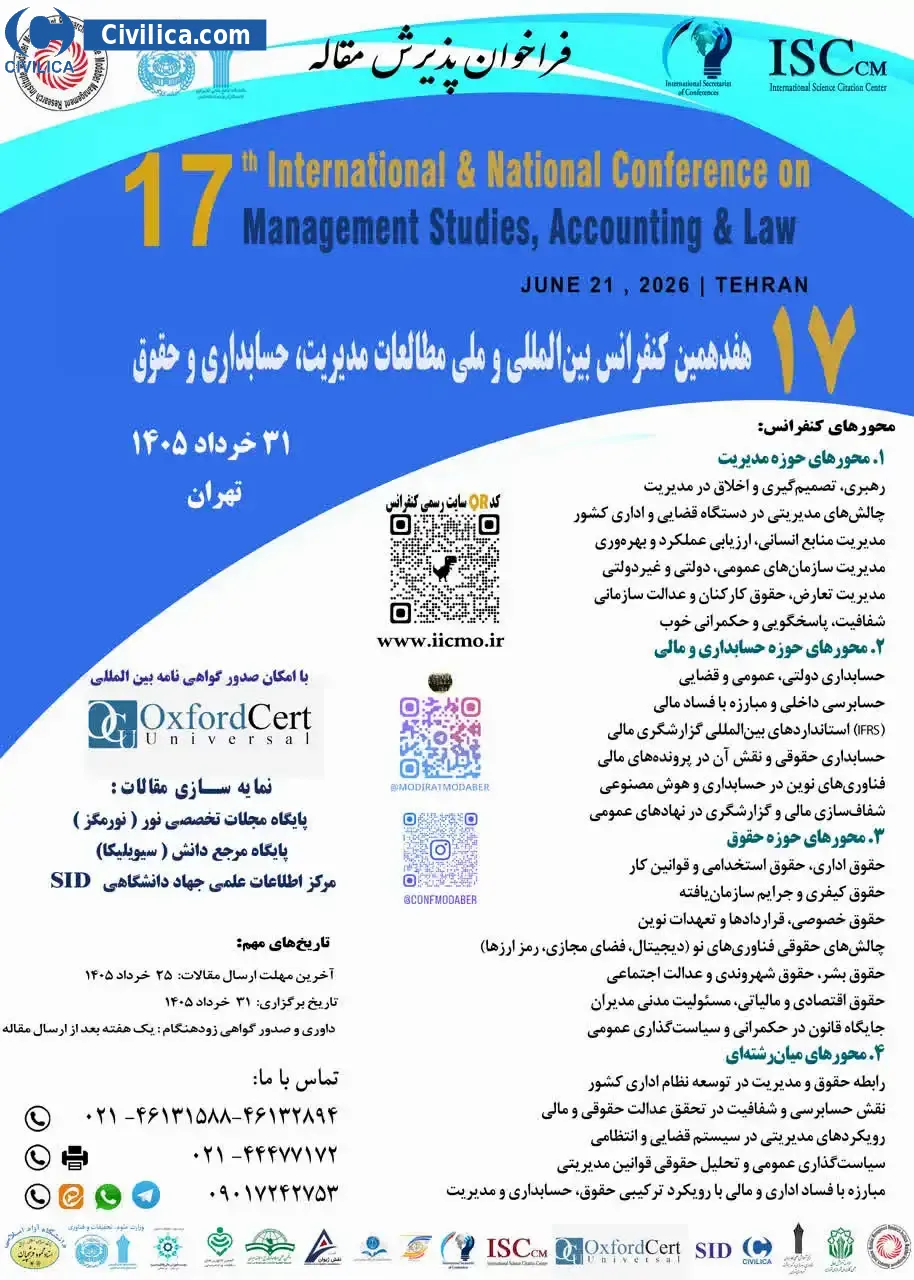 مجموعه مقالات هفدهمین کنفرانس بین المللی و ملی مطالعات مدیریت، حسابداری و حقوق31 خرداد 1405 · تهران