
چکیده مقاله
Blind children confront significant barriers in learning English as a second language ESL , primarily due to the predominance of visually based educational resources and the consequent lack of equivalent non visual pedagogical methods This conceptual paper synthesizes current research on multisensory learning and assistive technologies to propose a robust pedagogical framework for ESL instruction for blind learners Drawing on multisensory learning theory, universal design for learning UDL , and principles of assistive technology AT , this review identifies how tactile, auditory, haptic, and spatial modalities can be integrated into ESL curricula Key challenges, best practices, and policy implications are discussed Finally, the paper outlines recommendations for future research and teacher training, aiming to foster inclusive and effective English language education for visually impaired children
کلیدواژهها
نویسندگان

حسن رضا رحیمی تشریق
فوق لیسانس آموزش زبان انگلیسی
Fereshteh Parsa Ghorabaee
Islamic Azad University Phd candidate
Nazaninifatemeh Ameri
Phd candidate
Masoumeh Parsa
Islamic Azad University Phd candidate
شیوه ارجاع
Parsa Ghorabaee، Fereshteh و Ameri، Nazaninifatemeh و Parsa، Masoumeh،1404،Toward an Accessible ESL Model for Blind Learners: A Multisensory and Assistive Technology Conceptual Review،اولین همایش بین المللی تحولات نوین در نظام های آموزشی، تربیتی، روانشناسی، مهارت آموزی و مهارت محوری با محوریت آموزش و پرورش در هزاره سوم،بوشهر
ارائهشده در
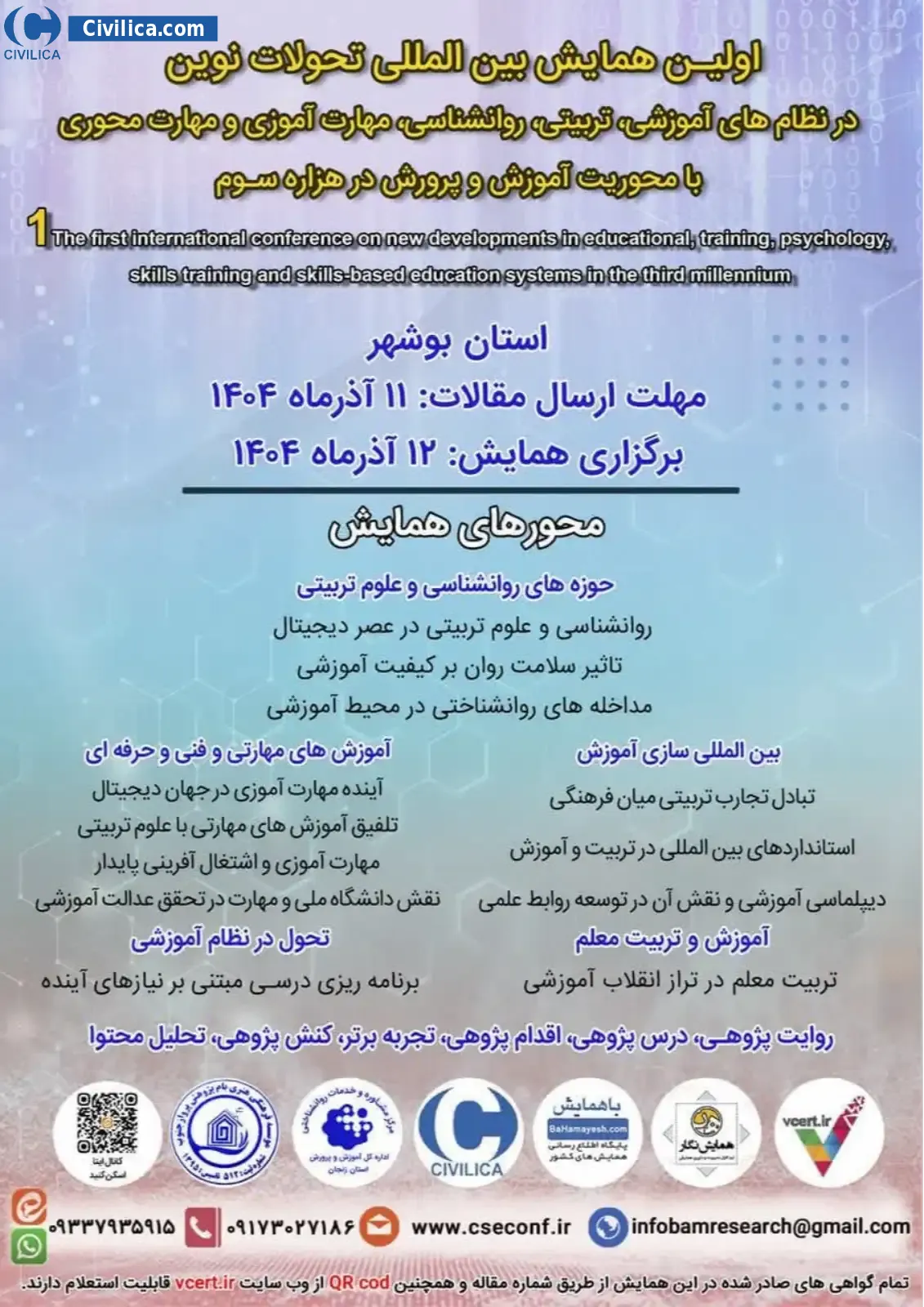 مجموعه مقالات اولین همایش بین المللی تحولات نوین در نظام های آموزشی، تربیتی، روانشناسی، مهارت آموزی و مهارت محوری با محوریت آموزش و پرورش در هزاره سوم12 آذر 1404 · بوشهر